by Paul Scully | Aug 12, 2016 | News |
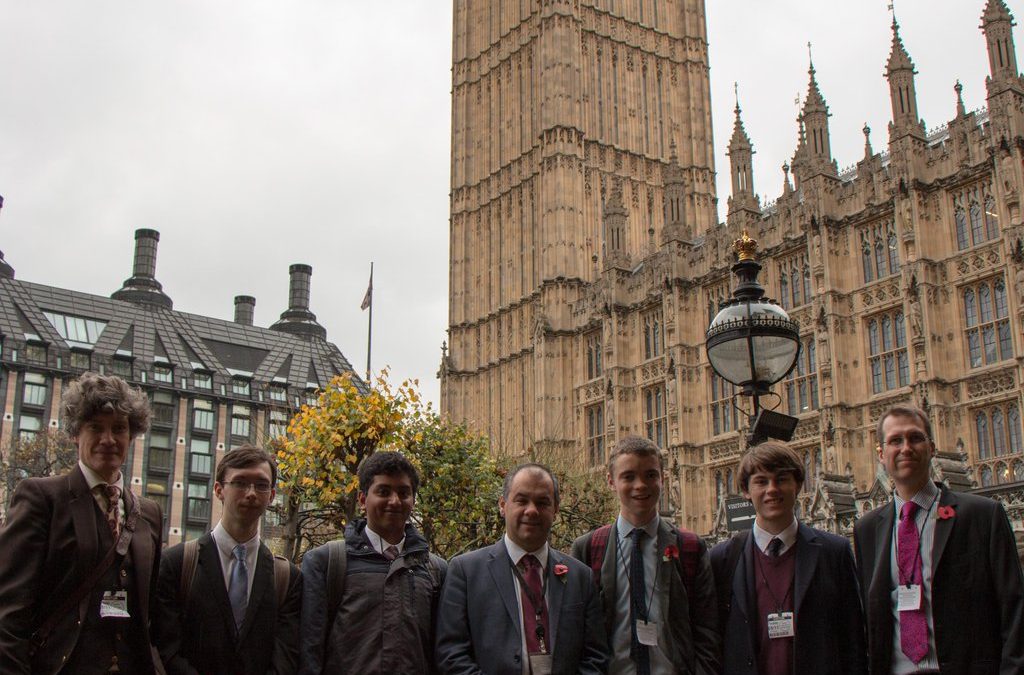
The Elizabeth Tower, home to Big Ben, is closing at the end of the year for three years of renovation works. I get a lot of emails requesting tours of the Tower, but unfortunately they are now fully booked up to their closing date, subject to cancellations.
However, tours of the Houses of Parliament are still very much going on, so if you would like a tour, just email me on info@scully.org.uk and I will be happy to help arrange one for you.

by Paul Scully | Jul 29, 2016 | News, News, Uncategorized |
Much as I love my job, the one thing that I knew I’d hate about becoming an MP was returning to a daily commute. I was right and it’s clear from my twitter feed, emails and letters that I’m not the only one who bemoans the atrocious performance of Southern Trains. I even managed to miss a ‘Meet the Manager’ event at Victoria station after my train was delayed. Last year, I started the call for Transport for London to take over the organisation of Sutton’s train services as they’ve done a reasonably good job in running the London Overground routes and TfL Rail to Shenfield. I was pleased that the Department of Transport have now agreed this albeit at the end of Southern’s franchise in 2021. TfL will take over the organisation of the parts of the Southern network that is predominately in London, though that is not the same as actually providing the services themselves.
That bodes well for the long term but doesn’t address the short term problems. I had thought that stripping GTR (who run Southern and Thameslink) of the franchise would help, but on further investigation I believe it wouldn’t change much immediately even if it did make us feel better for a while. The overall situation is complicated and is further exacerbated by unofficial union action which is providing commuters with a real summer of misery. It is this union action that we need to tackle first in order to strip back the underlying ongoing issues with Southern and Thameslink.
Network Rail
Some of the problems with the network are out of Southern’s control. The London Bridge station refurbishment is not due to be completed until the end of 2018. Signalling is woefully inadequate especially around the major junctions such as Purley and Selhurst. Because the Sutton lines join up with the mainline coastal routes, these all have knock-on effects even if they are not directly en route. Our franchise is the busiest in Europe, taking 22% of all rail passengers in the UK. Victoria station has more people passing through the barriers in the 90 minutes of the morning rush that fly from Heathrow in a day. The only way to increase capacity on the Southern routes is to move to digital signalling. Rather than having one train sitting between each set of traffic lights, digital signals monitor and regulate gaps between trains allowing them to travel closer together. This is how capacity and efficiency has increased markedly on the London Underground. There are several stretches of rail, especially closer to London where trains are only allowed to travel at a crawl because of the quality of the track. Replacing this requires significant investment and will entail many weekends of work. All of these issues are the responsibility of Network Rail, the government owned organisation that controls the rail infrastructure. Southern liaises with Network Rail but has no more input than that.
Long term solutions
Of course there are many faults that do lie solely with Southern. Trains breaking down are because of outdated rolling stock. Not enough staff until recently was down to a lack of recruitment by Southern although the unofficial union action has made this far worse. Southern are gradually introducing more carriages. The process is starting now but will take several months for the whole programme to roll out. This will eventually lead to more reliable trains. Southern started a major staff recruitment programme in 2014 but of course it takes time to train people once they’ve been hired. The old contracts that staff have been hired on date back to the steam age where rest periods reflected the physical nature of stoking furnaces and suchlike. Building up a staff roster who can look forward to a modern rail service will help tip the balance towards better management/staff relations where serving the customer is at the forefront of the job.
Union action
There had been some signs of improvement in April but things have got hugely worse since. The primary reason for this is RMT and ASLEF fighting against the introduction of Driver-Only Operated (DOO) trains. At the moment 40% of all routes in this franchise are already DOO including all of the services that go through Sutton. Most of the London Underground runs on this basis. Essentially the responsibility for closing the train doors before departing each station is with the driver using CCTV and platform staff, rather than with the guard on the train who can then be redeployed to more passenger-facing activities such as ticket sales and enforcement. No jobs are to be lost. At the moment the guard controlling the doors has to be specifically trained on their particular route and so cannot be moved to cover any other route to cover staff shortages, a significant hindrance to improved productivity. ASLEF had agreed to DOO trains on a number of routes but when an extra carriage were added to the Gatwick Express, they considered this a significant changeand so refused to keep the DOO system despite this already being operated successfully on this service. DOO has been in existence for more than quarter of a century. ASLEF representatives have been calling on members to “dig the trenches and prepare for war” when it comes to combating DOO.
The RMT recently talked about withdrawing the threat of industrial actions which is fine but what they need to do is to get their members to call off their unofficial action too. There is an extraordinary high level of ‘sickness’ where people are calling in to take a day off. Apart from disrupting the route that they are due to run, this leads to trains being in the wrong place so drivers who attend work on time are unable to operate anything and cover cannot be called in because of the need for route-trained guards. This go-slow is wreaking havoc on services. With Southern already underperforming, this further frustrates and indeed, annoys commuters. People have reportedly lost their jobs as a result of persistent lateness. One train in four arriving at Victoria on time is just ridiculous. Stripping the company of this franchise will do nothing to solve this immediate issue. DOO will be introduced across the network on August 21st. As it happens, their talk of withdrawal didn’t last long with a fresh five day strike announced for the 8th August onwards.
Southern have temporarily cancelled 341 trains each day claiming that this will be allow them to ensure the rest of the service can better cope with the unofficial action. This has had had mixed results but I was one of a number of MPs that told them that this was not the sensible way forward. Cutting further services is creating a hostage to fortune and adding to the woes of the paying public. There are also still too many services being delayed after this measure has been put in place. People have also complained about trains missing out stations in order to make up time. The Southern franchise works on a different basis to most others. GTR have a management contract with the Department of Transport for which they are paid a fee. They are not mitigating the risk of fines by skipping stations so this is simply an operational decision to ensure that services run as best as possible and that the rolling stock remains in the right position for the next service.
No easy answers
I have been working with the Department of Transport, GTR and the very many MPs from across the parties whose constituents are equally as affected. The union action must be resolved by September when people come back from their summer holidays. Demand dips by 20% in August but that clearly doesn’t last and so the pressure will soon return. GTR need a clear plan that can actually be delivered. The new Secretary of State for Transport is Chris Grayling, my neighbouring MP in Epsom & Ewell. His constituents are affected by the very same train routes as Sutton & Cheam. This situation is one of the most important items on his agenda (along with the impending airport expansion decision). I have already spoken to Chris about the situation and know that he is working hard on resolving the situation. It’s frustrating but it’s going to take time. It is scant comfort to remember the British Rail days when I had two unreliable trains an hour from Carshalton Beeches to Victoria. Demand has increased but so has expectation. We have plenty to do to make the service bearable, let alone world-class. But it is a top priority of mine to aim for both.
by Paul Scully | Jul 25, 2016 | News, News |
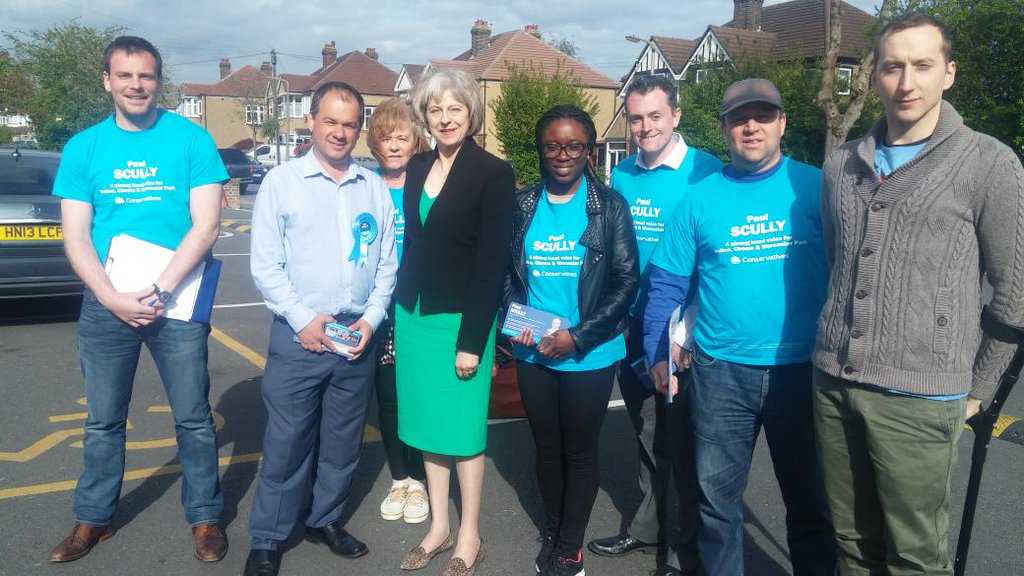
The past few weeks have been extraordinary for British politics. What looked like an uncertain summer for the government and the Conservative party has now become a period where Theresa May and her team are focused on Brexit plans and continuing to govern the country for the benefit of everyone. In the lead up to the Conservative leadership campaign, I spoke to as many people as I could about their thoughts on the matter. People were overwhelmingly in favour of Theresa May with Andrea Leadsom and Michael Gove running each other close for second place. For transparency, I thought it fair to tell you how I voted in the two leadership ballots and why.
I was sorry to see David Cameron go. Although we disagreed on the EU issue and I was unhappy with parts of his approach for the remain campaign, he was still a formidable Prime Minister whose legacy will extend to much more than this one issue and referendum result. Much as I would love to think that people in Sutton & Cheam were exclusively voting for me to be their Member of Parliament, I know that it was David Cameron’s strong leadership that attracted many people to vote Conservative last May. However as he believed it would need a new Prime Minister to work on Brexit, he triggered a leadership constest by resigning as Prime Minister. The rules dictate that Conservative MPs reduce the field of candidates to two by a number of ballots with the candidate receiving the lowest number of vote automatically dropping out each time. So on the first ballot, Liam Fox dropped out. Stephen Crabb decided to withdraw at this point as well.
In the second ballot, I voted for Theresa May. I started the day as I had been thinking all week, that my job was to ensure the best shortlist for the members and so had intended to vote for either Andrea Leadsom or Michael Gove in the knowledge that Theresa May had enough votes to get through with or without my vote. I was concerned about Andrea’s inexperience at a time when we need certainty and stability. I believe that Andrea made the right decision to withdraw her candidacy the following week, in what I know was a difficult decision after a highly-pressured weekend. I was not sure that Michael could unify the party or appeal to the wider electorate that we need to bring on board in order to maintain a majority, though he remains a very talented, intellectual friend.
In the meantime, I had spoken to Theresa May and just as importantly for me, Chris Grayling who is managing her campaign. As someone who I had campaigned alongside for a leave vote, I wanted to ask him why he had made that decision and how sure he was that the result of the referendum would not be reversed, kicked into the long grass or watered down so as to be meaningless. He reassured me on every point. At a hustings with the parliamentary party, Theresa was asked about Ken Clarke’s comments that she could be a ‘difficult woman.’ She replied that the next person who would find her a difficult woman would be Jean Claude Juncker.
In the end, I could not look beyond Theresa at this time. If we were choosing someone to take over in a couple of years, my view may have been different. But we weren’t. The winner was to step into No. 10 the very same day and give their nuclear instructions within the next 24 hours. They needed to give the markets confidence to ensure that our economy does not suffer from any more uncertainty than is necessary.
A number of people said to me that the next Prime Minister needs to be someone who campaigned to leave. I did not see this as being a prerequisite. The fact that Chris Grayling, David Davis, Liam Fox, and Priti Patel backed Theresa, people who I campaigned alongside as part of the Vote Leave team, gave me the reassurance that I needed to ensure that Brexit means Brexit, that there will be no second referendum and no watering down of the referendum result as Theresa has said on a number of occasions.
I used my first ballot to support Liam Fox. Not because he was likely to be one of the shortlisted two, but because his experience in international matters and the security and defence of this nation needs to be brought into the fore and so I wanted to ensure that he had a reasonable showing. The formulation of a Brexit team was an inspired move. David Davis as Secretary of State for Exiting the European Union will bring his thoughtful but determined approach to secure the best terms for the UK and Liam Fox as Secretary of State for International Trade will work on developing the opportunities for us to grab as we leave. In contrast to some of the media who are more interested in sensationalism, I believe that Boris Johnson will be a great salesman around the world for ‘Brand UK’, doing the same job as he did for London when helping to build our capital city into the leading tourist destination, the global centre for financial services and a hub for creative services.
Now, whilst the Labour Party continues its sad, internecine war, Conservatives both within Parliament and the membership have come together quickly, knowing that only by being a united team focused on the country, not the party, we will deliver Theresa May’s vision of fighting injustices, breathing new life into positive reforms that will make our lives better, our country fairer and more prosperous and provide opportunities for everyone to fulfil their potential. We have a bright future ahead of us. We need to concentrate on grabbing it with both hands starting today.
by Paul Scully | Jul 23, 2016 | News |
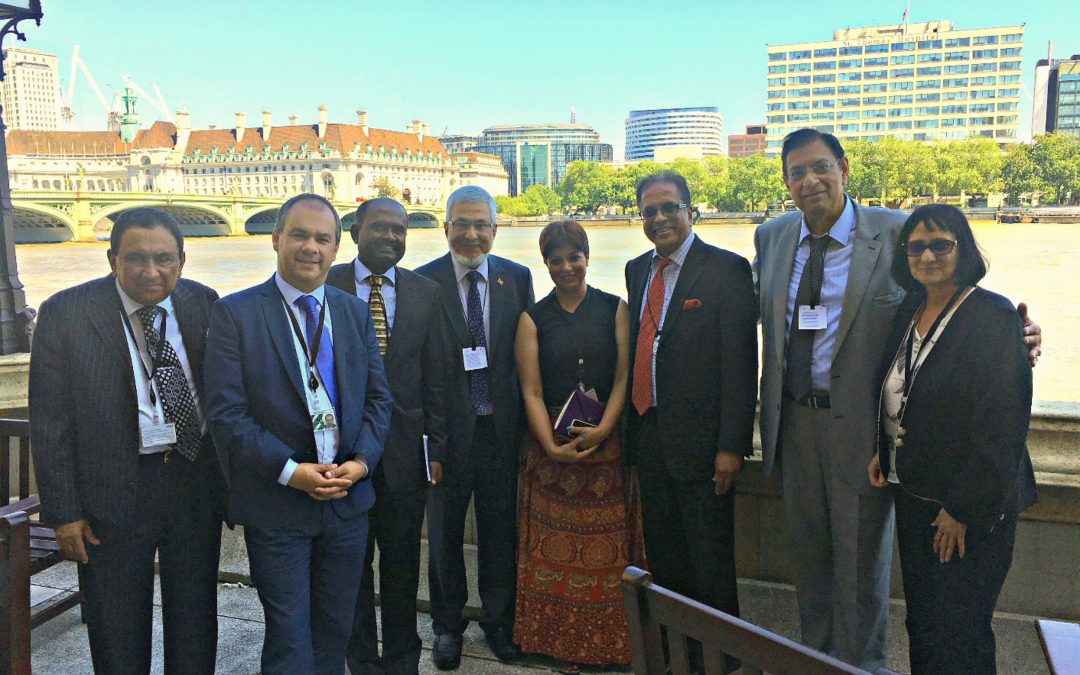
This week I brought together UK Parliamentarians and Indian business leaders for a round table discussion in Parliament to look into the opportunities that may arise following Brexit.
Following productive trade talks at the highest level over the last year including post-referendum, I was keen to continue and build on the positive relationship between the two countries that already enjoy considerable bilateral trade and investment.
India was the natural place to start a series of events to discuss improving trade relations between the UK and its many global partners in the aftermath of the UK voting to leave the EU. I hope that this will show the Indian business community that MPs are serious about making Brexit work for everyone as well as demonstrating to MPs that despite the current uncertainty, successful trading between the two countries will develop regardless.
We explored how to broaden and deepen the bilateral relationship between the UK and India. The primary feeling at the meeting was one of great optimism and opportunity. We looked at particular sectors which could benefit from strengthening and broadening our already close and historic ties. These included IT, travel and tourism, luxury goods, aviation and financial services. Exporting brands that can appeal to the burgeoning middle classes in India, a country that is home to one quarter of the world’s under-25 year olds is an exciting prospect as well as looking at Indian brands that are unknown as yet here in the UK.”
The group resolved to build an informed view among parliamentarians of business opportunities; feed into discussions between India and the new Secretary of State for International Trade, Dr Liam Fox MP; look at visa rules to enable easier business travel and work with UK countries to make it easier to export, thus increasing the mere 12% of UK companies that currently have any trade outside the UK.
I intend to follow this event up with similar style meetings, fostering discussion and promoting trade relationships between the UK and other countries, particularly those with emerging growing economies, including the Middle East, Commonwealth and ASEAN countries.

by Paul Scully | Jul 22, 2016 | News |
I have backed a call by Diabetes UK for local action to improve the delivery of life-changing education for people with diabetes. Evidence shows that going on a diabetes education course can help people manage their condition more effectively and reduce their risk of developing devastating complications, enabling them to live a long and healthy life.
I attended Diabetes UK’s parliamentary launch of its State of the Nation 2016 report, which has highlighted that the vast majority of people with diabetes are not getting access to an education course to give them the tools they need to effectively manage their condition.
The report found that in 2014-2015 only 2 per cent of people newly diagnosed with Type 1 and 6 per cent of people newly diagnosed with Type 2 diabetes were recorded as attending a diabetes education course. Diabetes UK say this is a huge cause for concern as people with diabetes only spend around three hours with a healthcare professional every year and for the remaining 8,757 hours they must manage their diabetes, which is a serious and complex condition, by themselves.
Diabetes UK is urging clinical commissioning groups (CCGs) to put in place an action plan to improve take up of diabetes education for people living with diabetes in their communities and ensure people are supported to manage their condition effectively.
Diabetes UK’s State of the Nation report shows that many people with diabetes are still not getting the support they need to help them manage their condition. This is leading to thousands of people with the condition developing life threatening health complications such as blindness and amputations. This is not only personally devastating to those affected but is also leading to huge costs to the NHS.
Action is needed so that all people with diabetes can have access to education as well as their key health checks. This is why I will be writing to NHS health leaders in my area asking them to commit to ensuring more people are attending education courses.
Robin Hewings, Diabetes UK Head of Policy, said: “We are pleased to have Paul Scully MP’s support on what is a very important issue. The poor state of diabetes education is fuelling a health crisis that if left unchecked threatens to bankrupt the NHS. Ten per cent of the NHS budget is spent on diabetes, but about 80 per cent of that is spent treating complications such as blindness, amputation and stroke. Not enough is being invested in good healthcare which could prevent these complications in the first place. Our State of the Nation report shows that with better integrated services and support to enable people to self-manage their condition, the NHS can save lives and money.
We are encouraged by the inclusion of diabetes care in the forthcoming CCG Improvement and Assessment Framework (CCG IAF) and we are calling for local clinical commissioning groups to implement these measures as a matter of urgency. With the right support in place, people with diabetes can lead long, healthy lives.”
The State of the Nation report can be downloaded at www.diabetes.org.uk.
You can support Diabetes UK’s State of the Nation report by clicking the following link and calling for local decision makers to provide more access to diabetes education.
Takeda UK Ltd has financially supported the production of the State of the Nation report; it has had no input into its development or content.

by Paul Scully | Jul 21, 2016 | News |
I was delighted to attend Sutton Grammar when they recently hosted the South West London Regional Big Bang Fair, sponsored by EngineeringUK. Schools from all across the borough came to experience a fun packed day of Science, Technology, Engineering and Mathematics (STEM) learning and hands on activities. With over 1000 pupils, over 40 exhibitors and workshops, the school was the place to be for Sutton’s budding scientists.
St Philomena’s, Nonsuch High School, Greenshaw High, Sutton High, Carshalton College and Overton Grange all delivered workshops to the pupils. There were also stalls from groups as diverse as the National Space Agency, Bletchley Park, Thames Water and King’s College Hospital NHS Trust.
Jamie Costello, Head of Science at Sutton Grammar, said: “What a wonderful day, providing the perfect mix of fun and learning. Encouraging our young people to consider careers in Science and Engineering is important and what better way to fulfil this goal than to attend a Big Bang event.”
Notable events included Kritin Nithyanandam winning a place at the national finals next March with his project to improve the treatment of Breast Cancer.
Also winning a place at the national event was an RHS sponsored Smart Watering System for plants, a satellite based tracking system for pupils on Duke of Edinburgh Trips and “Stackamals” a product that uses layers of wood to create an animal ornament.
This was the third time the event has been hosted in Sutton.
Special thanks to B&Q for allowing visitors to use their car park. It was also great to have such brilliant support from local company Subsea7 representing engineering and Sutton’s own specialist science centre – the Institute for Cancer Research.
You can watch the video from the day’s event here.
