by Paul Scully | Dec 8, 2015 | News |
I recently met with Nicola Zimmermann, who manages the Sutton office of the Alzheimer’s Society, to discuss changes happening in Sutton.
When Nicola took on the role 18 months ago, she tells me that they were not using their full potential and all the groups were only reaching about 60 of the approximately 2000 people in Sutton living with dementia. However, the Dementia Adviser and Support Services have supported 440 people affected by dementia with an extra 570 coming through the doors this next year These are commissioned by Sutton Council to provide dementia services and by the Sutton Clinical Commissioning Group (CCG) in relation to health provision.
The Sutton Alzheimer’s Society, while providing social events such as ‘Memory Lane’ café, is trying to get back to the core aim of the charity, which is to provide information, talk frankly about dementia and remove the stigma attached to this condition.
Amongst the changes are to take the cafés to other parts of Sutton, such as Belmont, Worcester Park, Sutton and Wallington, to provide peer support and carer support groups and working with GPs to get in touch with people as soon as they are diagnosed.
One of the biggest changes we discussed was Nicola’s attempts to learn from Dementia Friendly Communities and change social attitudes towards dementia. This means changing the conversation to not ‘suffering’ with dementia, but ‘living well’ with dementia. Part of this process is to engage people living with the dementia with the community through the many social groups already run by others such as singing groups and other activities.
Working with the Dementia Action Alliance, this has involved the Sutton Alzheimer’s Society working with local organisations to encourage their members to attend social events, like friendship groups, within the community rather than run by the Alzheimer’s Society itself, which could broaden their social life and reduce social isolation.
As well as helping with integration, it also helps deal with funding concerns as Sutton Alzheimer’s Society can use their expertise in more appropriate settings and community groups can open up their doors to the needs people with dementia have in the social community.
I found the meeting incredibly useful and I look forward to working with Nicola and the Sutton Alzheimer’s Society in the future.
by Paul Scully | Dec 7, 2015 | News |
 Last Friday, I was visited by a delegation of MPs from all over the Commonwealth during an event hosted by the Commonwealth Parliamentary Association (CPA).
The annual Westminster Seminar is CPA UK’s keynote capacity-building programme for first-time parliamentarians and newly appointed procedural/committee Clerks from across the Commonwealth. Each year the five-day programme provides a unique platform for its participants to meet their 
 counterparts and explore parliamentary democracy, practice and procedure within a Westminster framework, and share experiences and challenges faced in their parliamentary work.
From Monday 30 November – Friday 4 December, CPA UK welcomed over 70 parliamentarians and clerks to the 64th Westminster Seminar on Parliamentary Practice and Procedure at the Houses of Parliament, London. One of the seminar’s key objectives was to explore representation and the role and responsibilities of the MP in the constituency.

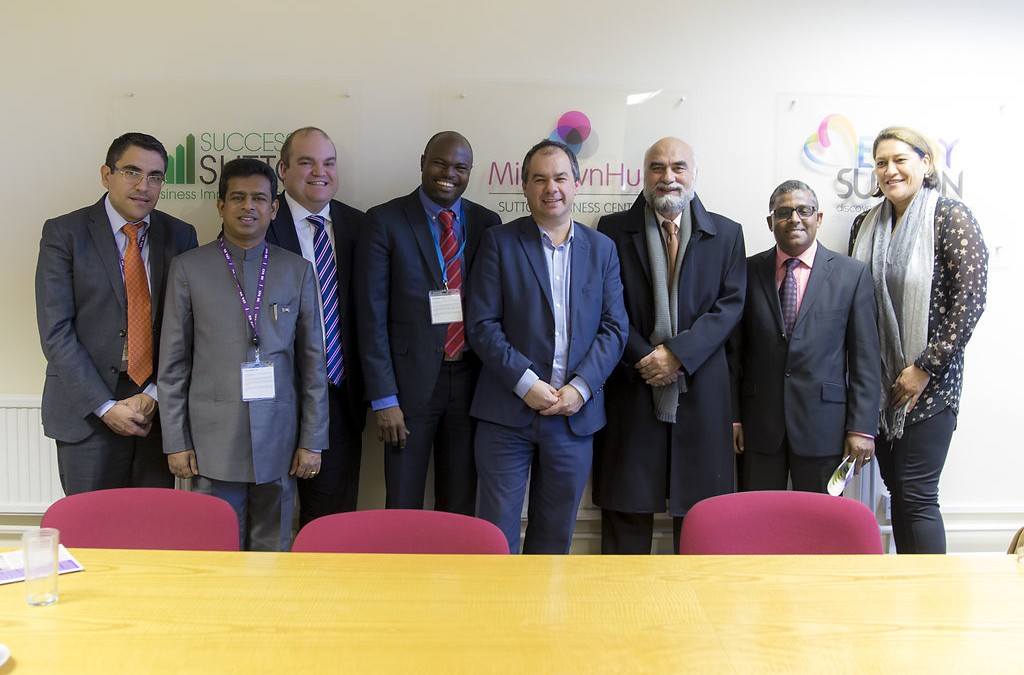
 I was delighted to host Umar Hussein MP (Maldives), Antione Borg MP (Malta), Gregory F. WIllock MP (Montserrat), Meka Whaitiri MP (New Zealand), Syed Ghazi Gulab Jamal MNA (Pakistan) and Buddhika Pathirana MP (Sri Lanka) in Sutton, Cheam and Worcester Park.
The day began with us all meeting at my offices in Sutton to discuss the role of a Member of Parliament, how I run my office and some background to Sutton, Cheam and Worcester Park. The particular issues we discussed were the schools place crisis, healthcare provision in Sutton and the local economy.
We then went to visit Ross Feeney, the Chief Executive of Successful Sutton, to discuss how a business improvement district (BID) 
 operates, his plans for Sutton and how we can help to deliver these. Ross delivered a brilliant presentation, and the Commonwealth MPs were incredibly impressed with his enthusiasm and his ideas. The day ended with a discussion from local Conservative councillors about their role, their relationship with Paul and how the Council is supposed to deliver local services. This gave an opportunity for us all to discuss how local government operates differently around the world.
I thoroughly enjoyed the day and I think visits like these only strengthen the relationship that Britain  has with it’s Commonwealth partners. I hope to be able to stay in touch with the MPs that I met on the day. I learned a lot from them about how their system’s operate, and I hope I managed to return the favour. Closer ties with the Commonwealth are, in my opinion, essential for the future of the UK, and I look forward to meeting more MPs from the Commonwealth during my time as an MP.
Photos courtesy of Naomi Gabrielle Photography.
by Paul Scully | Dec 1, 2015 | News |
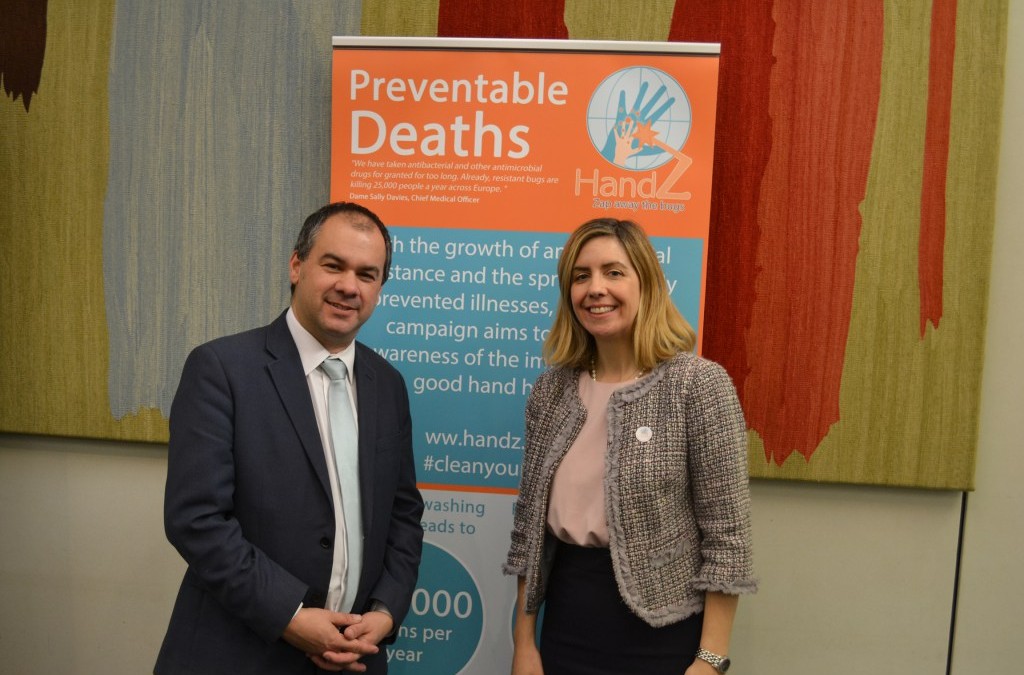
Recently I attended the launch of the ‘Handz’ campaign in Parliament, hosted by my colleague Andrea Jenkyns MP (pictured) and Chief Medical Officer Dame Sally Davies.
The Handz campaign is trying to raise more awareness of Hospital Acquired Infections (HAIs) like MRSA, campaign to educate young people about the advantages of good hand hygiene and push ahead to help solve these global issues.
 Andrea said, “In November 2011, I lost my father Clifford to the Superbug MRSA following a routine procedure in a hospital. Within 24 hours of being discharged he started to feel unwell and we took him back to hospital and were devastated to hear he had been infected with MRSA. He was in an out of hospital for the last four months of his life. While he was there, despite the fact he was suffering from an infection he picked up in hospital, I was shocked by the lack of awareness of basic hand hygiene in this particular hospital. We want to raise awareness around hand hygiene and make sure we can spread the word far and wide that simple, easy hand hygiene techniques can make a real difference. This isn’t just about hospital settings either. With an ageing population and growing pressure on the NHS, preventing infections and illness is more important than ever. Hand hygiene is a big part of that, and I am delighted that Paul is supporting this campaign.”
I was shocked that, in London alone, from January to March 2015, 2025 people contracted a HAI. In 2014-15, the Epsom and St Helier University Hospitals NHS Trust recorded seven cases of MRSA. I’ve spoken to the Chief Executive and I know they are trying to do more to stamp this out, as even seven is seven too many.
To find out more about the Handz campaign, visit their website at http://handz.org.uk/.

by Paul Scully | Nov 27, 2015 | News |
To protect our national security, we are defending our country’s interests abroad and keeping our citizens safe at home.
There will be no cuts in the police budget with real terms protection for police funding and we will deliver on our commitment to spend 2 per cent of our national income on defence.
 It is absolutely right that we are protecting the police budget. Locally I am very supportive of the Borough Commander David Snelling (pictured) and of the great work that the police do in Sutton. Sutton is lucky to have one of the top three lowest crime rates in London, and that is testament to the brave men and women of the police in Sutton who keep us safe. The police protect us and now we are protecting the police.
I have always been clear that I did not want to see police numbers cut. I have been working hard on this issue with our Conservative London Assembly Member, Steve O’Connell. We beleive that effective and visible policing works, not only as a deterrent of crime, but also for intelligence gathering and it offers the public reassurance. I also met with the Chancellor, George Osborne, before the Autumn Statement to express that I wanted to see the police budget protected.
It’s a shame that some Lib Dems were getting ahead of themselves and scaremongering about police numbers. Talk of reducing police numbers actually came from the management body of the Metropolitan Police, not politicians, who were essentially negotiating in public via the media. This sort of scaremongering only increases the fear of crime.

by Paul Scully | Nov 26, 2015 | News |
Following the terrible attacks in Paris, I attended a special remembrance service at the Baitul Futuh Mosque in Morden last Friday.
There was a speci al service of prayers and brief remarks, as well as a minute’s silence in memory of those who lost their lives.
This was a good opportunity to show our solidarity both with communities in London and Paris, and send a clear message that such terrorism will only serve to unite us even more.
I was touched to see so many people at this event, from all backgrounds. We stood united in the face of terrorism and in mourning of the victims of those tragic attacks.
I would like to thank Baitul Futuh Mosque for inviting me and for organising this service.


