by Paul Scully | Jan 23, 2013 | News |
 David Cameron made a historic speech regarding Europe this morning on our future relationship with Europe. I voted for the Referendum Party in 1997, my only lapse from voting Conservative and two weeks before joining the Conservatives as a Party member and so I am delighted that a leader of one of the major Parties, has finally taken a step back to look at where we are with the EU before taking a giant leap forward in negotiating a better deal and then asking us what we think.
The Prime Minister and I come to the matter of Europe from different ends of the spectrum. My default position is to leave the EU and make our own way in the world unless I can be persuaded that a new relationship can be formed that retains opportunities for free trade and employment but frees us from the shackles of bureaucracy, a fundamentally undemocratic set of institutions and the lavish spending of our money that is best kept in the pockets of UK taxpayers. However our views converge when considering his five principles for the starting point of any renewed relationship, namely competitiveness, flexibility, power being able to flow back to member states, democratic accountability and fairness.
There is a lot to consider before we are close to having a referendum. An audit of EU powers has already begun in readiness for renegotiation. Legislation will need to be drafted ready to put before Parliament after the General Election due in 2015. Then there is the obvious point of having to win a Conservative majority at the next election in order to see any of this happen.
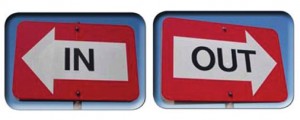
The speech seems to have gone down well in many quarters but not with everyone. Ed Miliband ruled out the possibility of Labour asking people what they wanted when on the Andrew Marr show saying, “My position is no – We don’t want an in out referendum”. Nick Clegg does not believe that this move is “in the national interest” and Nigel Farage asks why the referendum cannot happen immediately. Eight out of ten people want to have a say in a referendum on the EU so Labour and the Liberal Democrats’ position is indefensible. They would not vote for the legislation required for a referendum to be held before 2015, thus making an earlier resolution as wanted by UKIP impossible.
Politics is the art of the possible so the Prime Minister is absolutely right to aim for a date post-2015. Polling by YouGov shows how in just two months, the views of the public as to whether we stay in or out are very unsettled with a 21% lead for those wishing to leave the EU being replaced by a 6% lead for those wishing to remain a member. The matter of Europe should not and must not relegate the UK economy to anything less than the highest priority for our attention. However it is incredibly important and therefore is worth getting right. Five years to establish the conditions of a new relationship with the EU, introducing primary legislation and having a national debate is not actually that long.
The original 1975 referendum has locked us into a loveless relationship with our European neighbours for 38 years. Now I know that people my age and older believe that things don’t last as long as they did, but don’t expect a second bite of the cherry for some decades to come if you don’t get the answer in the referendum that you favour. Unless you are happy with the status quo, it’s time to get behind this decision and have your say, something that will only happen under a Conservative government.

by Paul Scully | Jan 13, 2013 | News |
 On Friday I went along to a meeting of local residents who are concerned about the NHS reforms and how they might affect services here in Sutton. The campaign organisation 38 Degrees had called on their members to form such groups to monitor new Clinical Commissioning Groups, consortia of local doctors who are due to take over the role of their local Primary Care Trust (PCT) especially in where you might be sent for further treatment. The Sutton Clinical Commissioning Group consists of 28 local GP practices led by local GP and former councillor, Dr Brendan Hudson.
Although there were only 7 residents there, these types of groups usually grow slowly. However what quickly became clear is the different concerns and angles that members had which will be difficult to manage in defining a role. It is how this is managed that determines how effective local decision making will be. In a discussion about defining the group’s role, the key matter of ensuring quality is not overlooked in favour of cost was touched on but needs to be at the top of the agenda. Much of the discussion centred on ensuring that the NHS was not privatised. Since there is no question of this happening through the reforms the risk is that people will concentrate on the politics of the NHS rather than the delivery of effective services.
As one might expect I am in favour of the reforms. Although they haven’t eliminated the alphabet soup of acronyms in the NHS they will bring decision making to GPs and patients rather than Whitehall mandarins. For this reason I see the changes as bottom-up reforms rather than top-down that is often trotted out by the Labour Party. I am not sad to see the end of PCTs having seen first-hand how much money is wasted when I was on the Project Board overseeing the rebuilding of Stanley Park High School in Carshalton. Bureaucracy and intransigence saw delays that resulted in our local PCT ending up with less money for the sale of Queen Mary’s Hospital where the school was built and eye-watering legal fees between two taxpayer-funded bodies, them and Sutton Council.
The use of private contractors in the Health Service is nothing new. Your GP is not and has never been an NHS employee. They are private practioners usually fully funded from public funds unless they do additional private work. The key is how they are contracted. The same is true for private contractors in other areas from cleaning hospitals to adding capacity in some treatments. If the tender contract is drafted well building quality and accountability into the specification and the contractor is managed well, there should be no reason why a private contractor cannot provide at least the same quality as in-house provision.
This leaves the question as to what should the role of groups like the local 38 degrees residents be. The NHS is notoriously complex. It is hugely difficult to scrutinise well. Residents taking an interest in any part of the service will ensure that there is greater transparency and accountability. That won’t be immediate. Residents need to know where to look, how to understand the jargon and the weblike structure that remains but it is important that they start to get involved. We have seen what happens otherwise. The one good thing about the Better Services, Better Value review was that it is being done locally. The terrible thing about it is that it is not being done openly with members of the public being able to see the decision making process and influencing it at an early stage. We need more residents to become interested and involved so the community isn’t always reacting to what is being done to them, but instead is responding to improvements that are being introduced with them.

by Paul Scully | Oct 12, 2011 | News |

You may assume that the Daily Mail would welcome George Osborne’s announcement that Council Tax would be frozen for the second year in a row. In an
interesting but perverse article, Ross Clark of the Mail argues that the freeze will lead to councils increasing fees elsewhere. In fact councils will receive the full amount because George Osborne is picking up the slack by using an £800million fund of money left unspent in Whitehall to compensate local authorities for lost revenue. The amount of council expenditure covered by council tax collected varies enormously between authorities. Two London Boroughs illustrate the stark contrast with 34% of Kingston’s spending coming from council tax receipts compared to a mere 6% across the way in Tower Hamlets.
The article continues by claiming that Eric Pickle’s call for localism has exploded in his face because of councils increasing their parking charges by different amounts. The fact that different councils are responding to the economic climate in different ways is not new and is exactly what would be expected from a truly localised system of local government. What is new is the lack of regulation, inspection and bribery through ring-fenced grants that the previous central government used to flatten out local differences. This stifled so much innovation, and pandered to the lowest common denominator. Councillors acted as branch managers of Whitehall, rather than being able to respond to local challenges and demands.
We have a degree of choice in the education of our children; community schools, academies, Free Schools and the independent sector. The National Health Service has an increasing level of choice for patients but local authorities have remained largely untouched with the occasional tinkering around the edges and the occasional discretionary scraps of funding to give neighbourhoods the impression that they could engage with their local authority in a meaningful way.
Allowing local authorities to make visibly different decisions may startle some people, who then may investigate further and realise how long some things have been allowed to carry on without challenge. Similarly, they may discover some superb examples of innovation that have been hidden from view. Residents can then engage on the basis of full disclosure, voting less on a tribal basis and more on what effect their decision may have on their lives over the following four years. Few people would hand over £5,000 to a travel agent or car salesman without worrying about the details of the holiday or specification of the car that they will receive in return. However, a huge number of people do exactly this with their council tax over the four years of most council administrations.
We’re used to exercising choice right down to what coffee we buy in the supermarket. When presented with fifty different jars on the shelves, the decision is not always on what is the cheapest. An ethically minded shopper may spend extra on Fairtrade, someone who wants to impress may choose a coffee from a particular area. Most people still end up with the big, safe brands and this will be the case when it comes to voting. However, a choice based on the fact that local representatives will take important decisions close to the people who are most affected, must surely always be the best. Localism can be edgy, especially whilst people adjust to their new responsibilities and to greater accountability, but voters will now know where their local decision makers live and councillors will need to up their game. You cannot have it both ways. It is a case of responsive local government or highly regulated, centralised decision making from Whitehall. So, go local but then shop around. Wake up, smell the coffee and see if there’s another brand that suits you better. Maybe that quietly streamlined jar in the corner will have a fuller flavour at a lower cost.

by Paul Scully | Oct 1, 2011 | News |
 Politicians too often have an opinion on everything, whilst being light on experience. The Conservative Party have a volunteering programme called Social Action which turns this truism on its head. I joined 35 volunteers, made up of MPs and activists, on a trip to Bangladesh, where we spent a week undertaking four projects in the Sylhet region that will have a significant effect on some of the poorest people in the world.I helped document the work of BRAC and Sightsavers, two inspirational organisations coming together with the ambitious target of eliminating avoidable blindness in the region by 2013. Our team, led by Nicky Morgan, MP for Loughborough, saw how BRAC were building a network of ‘Barefoot Doctors’, women who visited each house in a number of villages to offer advice on such medical matters as eye care and family planning. We saw the impressive number of cataract operations that were performed each day and the instant, positive effect that they had on the patients, allowing them to return to work and so provide for their families. It takes 5 minutes to restore someone’s sight through a cataract operation at a cost of just £27. We’ll continue to work with BRAC to raise the profile of their Vision Bangladesh programme. If you are able to help restore just one person’s sight, you can donate via the BRAC website. Andrew Stephenson MP took a team to a number of schools to teach English, sometimes in classes of 120 children. A calf nonchalantly walking into one of the classes mid-lesson, gave Andrew some material to speak to the children about. Anne Main MP helped to launch a cricket centre and conduct trials for a football team in Sylhet, all under the auspices of the London Tigers, a London-based charity which has grown from strength to strength since developing from a local football team who felt they could give opportunities to disadvantaged Bangladeshi children in London.
The keynote project was working with Islamic Relief on the total refurbishment of the Hazi Muhammed Shafiq High School in Sylhet. 400 children were trying to get an education with no electricity, no fans, no proper toilet facilities a leaking roof and four children sharing each desk. We’ve remedied this with a little money, generously donated by four successful Sylheti businessmen, and a lot of hard work. The response from the children was worth it alone.
So why do we do it? Shouldn’t politicians be chained to their office desks sorting out the deficit? Doesn’t charity begin at home? These questions are valid but fail to look at the wider picture. We’ve spent a small amount of time, making a huge difference to people who have nothing. We have a moral responsibility to help where we can. Such programmes have a knock-on effect in the UK as well. The city of Sylhet has a population of 463,000. The Sylheti population in the UK is around 300,000. There is a well-trodden path of migration between this region and the UK, especially Tower Hamlets in East London. Bangladeshis play an important role in the UK. The vast majority of ‘Indian’ restaurants in the UK are owned and staffed by Bangladeshis, specifically Sylhetis and the curry industry contributes some £3.5 billion to the UK economy. However, 10% of the GDP of Bangladesh is from remittances, Bangladeshis across the world sending money back to their families. We should welcome Bangladeshis to study and gain experience in the UK, but they should feel that a return to Bangladesh is a realistic and attractive prospect should they wish to do so. Investment and improvement in their own infrastructure, education and health care will help improve the life chances of Bangladeshi people.
We can manage immigration more effectively by not simply waiting to act when people arrive at our borders. Programmes such as this can help. Bangladeshis should not feel that they have to migrate to London to find opportunities for their families. It should be more appealing for people to stay and help develop their own country, something which would be beneficial for both their country and the UK.
The work on this trip went against the grain of handouts and dependency. A Sylheti Member of Parliament, himself educated in Britain, told us that what was needed most was expertise and support, rather than simply dipping into our pockets. In our small contribution, we have given a few people a hand-up and opportunity.
The amazing scenery, the warmth of the people and, yes, the curries, left a massive mark on the group and we would all go back, to a man. Beyond the projects, the earthquake which rocked the Sikkim region of India just one hundred miles away, shook our hotel, leaving one MP to attend an official dinner in her pyjamas. We finished the week with a cricket match against a team of Bangladeshi MPs shown live on TV. I was stumped off a wide first ball. Of course, this was being polite to my hosts. No taxpayers’ money was spent on this trip, nor Conservative party funds. Four generous UK-based donors made this all possible and they should serve as a great example of how to remain loyal to the country in which they live, whilst loving the country where they were born.


