
by Paul Scully | Jun 14, 2017 | News |
Following the tragic news that started coming through last night of the fire in Grenfell Tower, Kensington, many residents have contacted me about the safety of tall buildings in Sutton, such as Chaucer House.
My thoughts, and I’m sure the thoughts of everyone in Sutton, Cheam and Worcester Park, are with those caught up in the fire, especially the family and friends of those who have lost their lives.
I have been in touch with the Chief Executive of Sutton Council to ask for assurances that tall buildings in Sutton such as Chaucer House, which was also recently re-clad to improve the appearance of the building, are not vulnerable to similar occurrences. In addition, I have asked that all safety measures be checked to ensure such a tragedy does not occur here.
Residents have also been in touch to ask about ways that they could help the victims and their families. I have asked the Chief Executive of Sutton Council if we could organise a drop-off for Sutton residents to donate food, water, toys, etc, and have them taken to Kensington.
I will be sure to keep residents updated about my discussions with the Council on this issue.

by Paul Scully | May 26, 2017 | News, News, Uncategorized |
Given the concerns expressed over the last weekend about social care, it is important to explain the government’s plans properly, cutting through some of the political spin.
The Conservative manifesto includes our commitment to strengthen the social care system with more and sustainable funding to cope with the long-term pressures caused by the fact that we are living in an increasingly ageing society. After all, there will be two million more people over 75 years old in Britain over the next decade alone and a third more people aged 85-plus in 2024 than there were in 2014. Furthermore, the growing number of long-term conditions such as dementia is putting increasing pressure on the social care system. At the moment, elderly people in need of care face high costs and inadequate treatment, as well as the risk of seeing the assets they built up over a lifetime depleted to virtually nothing. I believe the social care system will collapse unless we make some important decisions now about how we fund it.
That is why we have to act. And it is why – to give people security – the government included in their plans, measures to make sure no one should have to sell their family home to pay for their immediate care needs. They have also said that they would protect a minimum of £100,000 of your savings so, however expensive your care, you will be able to pass something on to your family.
Most people don’t have to think about long term care and as a result it is important to understand how the present system operates, for despite the comments by some, care and support services in England have never been free. Right now, most people have to pay something towards their own care and some will already have to pay for all of the costs. The current lower limit, where all their remaining savings will not be used, is when savings fall to £23,250 at that point they will be on a sliding scale means test until their savings reach £14,000. For those in residential care the value of their house is taken into consideration as well.
Whilst local authorities may cover some or all of the cost of care in some circumstances, its help is “means-tested.” Right now whether you are in a Care Home or receiving support in your own home you will be expected to make a financial contribution. Furthermore, property has always been calculated in personal care package, evidenced by the existence of a “12 week disregard.” Worse, the present system can be a lottery, with some local authorities requiring the payment whilst the person needing care is in the home. This has often resulted in people having to sell their homes, causing real anxiety and worry to those who are in need of the care when the system should be supportive. These new proposals will bring an end to the need to sell your home whilst you are alive.
So, this plan would replace and in so doing improve the existing system where people often get poor quality care – and stand to lose almost all their savings and assets, including the family home. This plan addresses the worry people have when they have a loved one with a long-term condition, and they don’t know how they’re going to afford to care for them.
Furthermore, these proposals will be presented in the form of a Green Paper, (a government consultation document) and they provide the beginning of a solution to social care without increasing taxes on younger generations. That consultation will include an absolute limit on the amount people have to pay for their care costs. Importantly everyone will get to comment on what is in the paper and the government will listen carefully to the concerns of all of you before setting the final policy.
But since the manifesto was published, the proposals have been subject to fake claims made by Jeremy Corbyn. It is sad that he has resorted to whipping up fear and scaremongering. That is why I hope Theresa May’s statement, that there will be an upper limit to the amount that people will have to contribute should reassure you that you will not eat into all of your savings and satisfy those who have been worried by some of the scaremongering from the Labour party.
So for the avoidance of doubt, let me reiterate:
- We will make sure there will be an absolute limit on what people will need to pay for their care by capping the amount they will have to pay.
- We will put more money into health and social care.
- We will generate more money for social care by including the home into the test for people getting care in their own home. This is what already happens with people in residential care, and will mean people’s assets are treated equally wherever they are looked after.
- We will protect people from the huge costs that can accumulate from elderly care, by protecting people’s assets up to a minimum of £100,000 from social care costs. This will be done with a capital floor that is four times the current level of protection of assets.
- We will make sure no one has to sell their home within their lifetime to pay for care, by extending deferred payment agreements for people getting care in their own home. This will take the anxiety out of obtaining support.
- We will improve the care people receive by improving co-operation between the NHS and the care system, relieve unnecessary and sometimes unhealthy stays in hospital, and examine how to make best use of specialist housing and new technology approaches that enable people to live independently, with dignity, for longer.
- We will give people the right to request unpaid leave from work to care for a relative for up to a year, because the vast majority of care is provided informally, usually within the family.
For surely the greatest unfairness is if we dump the costs of social care on to our children, for this is the likely alternative. Despite all the scaremongering from Labour, that is what their proposals will do. Labour’s fantasy manifesto with over £10’s of billions of uncosted spending pledges will result in enormous tax increases. First, Jeremy Corbyn plans to drag some 3.9 million more homes, including half of all homes in London, into paying inheritance tax. Jeremy Corbyn has even said he could increase the basic rate of income tax for millions of people from 20 to 25 per cent to fund social care. So Labour will hit those families with heavy taxes, at the very point they might expect to receive the money from their parents.
I believe we save first and foremost so that we are not a burden on our children and so that we can all have a better than basic retirement without the need for our children to have to finance our support. Whatever is left over of our savings and capital, of course should go, if we wish it to our closest relatives
Our welfare reforms are getting more people into work and then ensuring they save through our recently introduced automatic enrolment scheme will make sure there are fewer people in future who fail to save sufficiently for their retirement, reducing the future burden on our children.
Theresa May has shown determination and boldness in tackling this issue head on, I believe she is right to do so, for the alternative is a Corbyn led government which will tax us so much that any thought of passing on savings to one’s children will become a folk memory.
I hope this explains what the government is proposing and reaffirms the fact that a full consultation will take place before any policy is put in place. I also hope that on 8th of June, you will balance this issue alongside the very real damage that a Corbyn led government – shored up by the Scots Nationalists, Plaid Cymru, The Greens and the Lib Dems, (in effect a coalition of chaos), would do to our country.
Whether you voted leave or remain in the referendum, I hope you will agree it is vital our government gets a good deal from the negotiations with the EU. Given that the Prime Minister will sit down with the EU to start those negotiations very soon,only Theresa May’s strong and stable leadership could achieve a good outcome for this great country of ours.

by Paul Scully | May 4, 2017 | News, News, Uncategorized |
Over the last 25 years we have had politicians queuing up to ‘Save St Helier’ but precious few coming forward with a realistic plan to do so. I believe that this needs to change which is why I invited Jeremy Hunt, Secretary of State for Health, to come to St Helier Hospital and meet me and the chief executive to discuss how we can secure St Helier’s future. Wouldn’t it be great if at the next general election, the future of healthcare in Sutton had been transformed permanently for the better? The chief executive kindly showed us around the best of St Helier and the worst.
The best included ‘board rounds’, an initiative in the hospital’s acute care centre where a group of doctors considered each patient on the ward in a multi-disciplinary approach, looking at everything together. This has led to mortality rates being at their lowest ever, despite treating ever more patients and recovery being so much better. We saw a new CT scanner adding much more capacity, enough to take in patients from right across South London. We also dropped in on the new restaurant which opened yesterday and which will free up space for a new renal unit.
The conditions of the existing renal unit was less satisfactory. As with everywhere on site, the staff do amazing things in the most challenging of conditions. Beds for dialysis are too closely packed in. The single lift is not big enough for a trolley bed, leading to the incredible situation of the Trust having to spend £10,000 a week on an ambulance shuttle service to take patients from the back of the hospital to the front.
We then went to the boiler room, which contains huge steam-powered boilers from the 1950s. If this is the heart of the hospital, it’s suffering from acute angina. Clearly hugely inefficient in its running, if anything went wrong, the hospital would struggle to stay open for any length of time. Two members of the maintenance staff go around the hospital every day, testing water for legionella and flushing through systems if and when it is found.
The back of the building is largely blocked off by hoarding. Not because of maintenance work but to protect passers-by from crumbling masonry. The trust has to find an estimated £5m of its budget to go to extra maintenance every year simply down to the state of the building. Despite these risks, the staff work so hard to achieve patient outcomes that are among the best in London.
Finally we had a chance to talk to Jeremy Hunt about creating a vision for the future. The NHS cannot start a public debate during the election ‘purdah’ period but I can. The views here are mine, I don’t speak for the trust, nor the government and I am open to change my mind through meaningful discussion with residents. To my mind there are three options for a new hospital. St Helier, Epsom or the Sutton Hospital site co-located with the Royal Marsden. If we went for the latter, the Marsden would benefit from extra intensive care and acute facilities to support its work. The vast majority of services at both Epsom and St Helier would remain where they are but the trust could remove some duplication thus releasing more money to spend on front-line treatment. To be clear, I do not want St Helier to close, neither does anyone in the trust. The reported one-for-one replacement with a super-hospital in Belmont is a non-starter. The key thing is to get residents involved and focus on care, outcomes for patients and the best locations for services here in Sutton, rather than just buildings. Each site should be able to retain their full urgent care centre with the A&E placed in the best location on clinical grounds, but we should remove the matter as a party political matter, instead discussing this in a pragmatic way that brings everyone behind a solution that we can secure from the NHS and the Treasury.
Once we have agreed on how we configure services over the three sites, we need to look at the difficult issue of funding. Building a new hospital now will cost in the region of £300m. Delaying this for five years will increase the cost to £400m, purely through the effect of construction inflation. One way of securing this funding is to work across London to realise the value of NHS-owned land that is surplus to requirements. It is estimated that there are a small number of trusts in London with around £1bn worth of surplus land. However, the challenge is to release this and then to see that money shared across other trusts, when they will want to keep it for themselves. Another possibility is prudential borrowing via Sutton Council or through pension funds. Sutton Council has borrowed money to buy Oxfam’s head office in Oxford and an office block in Wallington. When I was on the pensions committee for the council, we used to review Sutton Council’s pension investment in a number of shopping centres across the country. I can see no reason why this investment could not be better used to invest in our infrastructure. Either way, pension fund managers are on the lookout for low-risk, long-term investments like hospitals. As a loan, ownership would remain with the NHS, not in private hands. The challenge in this case is how to account for the debt which would sit on the government’s books at a time when they are trying to get to a point that they can reduce debt, not increase it.
If we can secure alternative funding for the largest part of investment, we would then need to secure funding for ensuring that the existing buildings are up to the job for the next 20 years. I have talked about £75m for this as an estimate. However, this figure is bound to increase as time moves on and the buildings continue to degrade. The trust has secured £12m, the biggest investment into the building at St Helier for years, to refurbish B and C blocks. They won’t look that different to the eye but that money will allow the windows at the back to be replaced and to firm up more of the crumbling structure. They have bid for £10m of energy efficiency grant funding to sort out the boiler but more will be required.
St Helier needs the brightest and the best to continue the great work there. As long as some politicians talk down the future prospects of the hospital, staff may be put off going there, instead looking to other hospitals like St George’s. Well, St Helier is not closing and the training and systems there work incredibly well, giving great opportunities to staff. It is therefore sad to see the continuing tales of woe from politicians with a campaign to fight, dragging down morale. It would be easier for me to take the default position of joining others in making supportive noises without any clue of what to do next. But I am a local resident first; one who wants to help to shape a solution. Whilst others petition, I have been trying to engage with decision makers to get answers. They won’t necessarily listen to political sloganeering but they just might to a reasoned, well-evidenced solution that is affordable, practical and deliverable.
Jeremy Hunt said after the meeting: “St Helier has made huge strides in recent years and I was delighted to hear more on my visit about progress and plans for the future. There is no question that St Helier hospital is here to stay, but we do need a plan for improving the facilities and the services on which local people rely. So it was great to see how Theresa May’s local Conservative candidates are working with the local NHS leadership to deliver a vision for St Helier.” I am pleased that he took the time to come, to listen carefully and really take on our thoughts as to how best to keep St Helier performing at its best for Sutton residents.

by Paul Scully | Apr 21, 2017 | News |
I was delighted to welcome the Minister for Housing and Planning & Minister for London, Gavin Barwell MP, to Sutton today to visit the Institute of Cancer Research (ICR).
The Minister joined representatives from the ICR, Sutton Council and myself to see the excellent world-class cancer research they do right here in Sutton, and to talk about how the government can further support the growth of the London Cancer Hub.
Back in November, I asked the Secretary of State for Communities and Local Government to set up this meeting and see how the government will help bring public sector land at the Sutton Hospital site back into use to deliver this project, which will create 13,000 new highly-skilled jobs right here in Sutton.
The Minister was able to see the plans for the Cancer Hub, which has already received government funding, up close and hear from the ICR and Sutton Council about ways the government could help. The ICR is already world-class and is ranked 4th in the world, behind only the American research centres.
 However, it is limited by space, so it plans to grow on derelict land at the Sutton Hospital site. The ICR continues to work closely with the Royal Marsden and the Epsom and St Helier NHS Trust, which the Minister agreed was an excellent example of the government’s modern Industrial Strategy in action – professional bodies co-locating to deliver better outcomes. The better outcomes in this case mean more robust cancer treatments, which is good news not just for Sutton, but the world.
However, the project needs major infrastructure improvements, especially in terms of transport, to make it viable. Phase Two of the Tram extension would have come to the Cancer Hub, however, the loss of funding from the Mayor of London now makes this unlikely. TfL are putting a business case together to increase rail services between Sutton and Belmont stations, but more needs to be done, especially in terms of more buses to the site, car access from Brighton Road and parking. The Minister agreed to work with City Hall on this, as well as explore other ways the government can support the project.
I am very grateful to the Minister for taking the time to visit the ICR and for supporting the exciting plans they have. The London Cancer Hub will put Sutton on the map as a world leader in cancer research and provide thousands of new jobs for local people.
by Paul Scully | Apr 11, 2017 | News |
The weekend brought sunshine to Sutton, but it also brought chaos in the form of the new bin collection scheme.
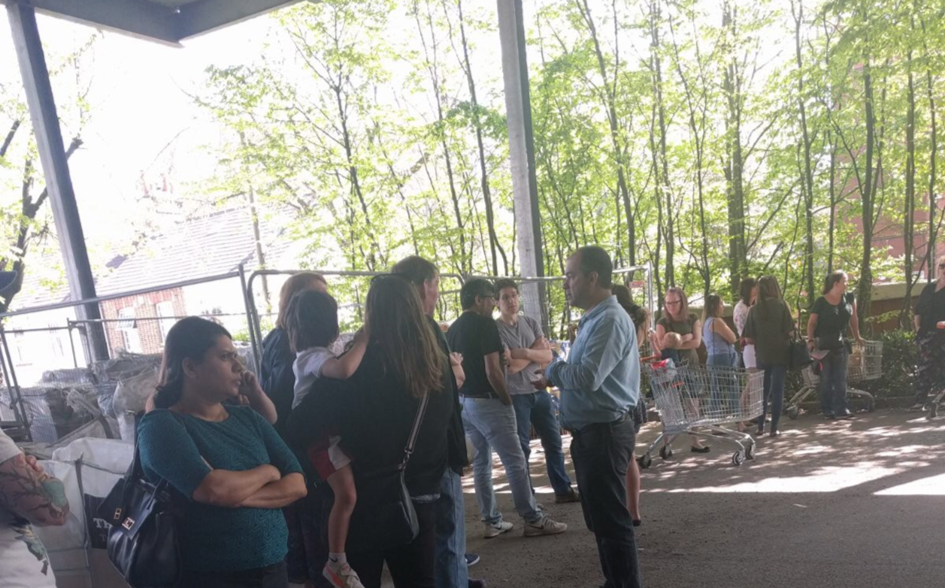
This past week, my office has been inundated with calls and emails about missed collections, fly-tipping, long queues at the Kimpton dump and the difficulty in getting through to the Council to report these.
The situation has been so bad, it’s been covered in the national press and #SuttonBinShame has become a trending topic on social media, causing huge embarrassment to our local area.
Some glaring problems have emerged this week:
• The system overall is just too complex with up to six bins per household,
• Residents are struggling to find room to store all the bins,
• The green recycling boxes are too small,
• The elderly and vulnerable struggle to lift the boxes when full,
• Food waste is being strewn over the pavements by foxes at night,
• Cutting weekly brown bin collection is particularly worrying to parents of young children who have to find space for two weeks of dirty nappies,
• Bin lorries have already managed to damage cars and even knocked over a tree,
• Despite separating the waste, residents have seen boxes emptied into the same bin.
•The council picked the same week to implement a new permit scheme at the Kimpton Reuse & Recycling Centre.
• Sutton Council’s phone system has gone down,
• All this with no consultation – residents have not been asked their views despite being pushed to do so.
I spent several hours on Saturday talking to residents at B&Q in Sutton. The Council said they would be there from 10am – 4pm to hand out extra green recycling boxes. However, despite all roads into Sutton being gridlocked as people tried to get there, and residents waiting up to two and a half hours in the queue for the new bins, they had run out by lunchtime. This was entirely preventable with insufficient stocks at B&Q, poor communication, no council staff until chased by Conservative councillors and conflicting advice which might have led to people getting parking tickets without me intervening. Many people gave up and left.
Your local Conservatives spent the day at B&Q helping residents and across Sutton talking to people on the doorstep, giving support where they could. Yet in the midst of all this chaos, the Lib Dem administration spent the weekend in Islington talking to themselves, plotting to win the next election.
The council has had considerable coverage recently in Private Eye, the Guardian, the Sun, BBC and online media, all covering this Council’s increasingly embarrassing mistakes. The chaos this weekend has also been reported in local and national news, but this is not just embarrassing – it is having a huge effect on people’s day to day lives, and the Council refuses to say sorry. Instead, they simply ask that we are ‘patient’.
Your local Conservatives know that changes must be made. Three other Councils are also implementing this scheme, but they are taking the time to talk to residents and find out what the problems are, before rolling it out. Why has Sutton rushed to implement this scheme when it didn’t need to? They could have taken the time to get it right, but instead they’ve tied us into an eight year contract and rushed it through, all without asking anyone or looking at it properly.
Last August local Conservative councillors called a special council meeting to ask the Lib Dems to take the time to ask residents for their views before implementing this scheme. They refused. A Conservative council would’ve taken a far more pragmatic approach to ensuring our recycling rates go up by focusing on simplicity of use rather imposing the chaotic mess we now find ourselves in.
Do keep an eye on the council website for news about collections. If your bins have not been collected make sure you report it by calling 020 8770 5000 (it may take a while to get through) or report it online here. To request additional bins, then call or do it online here. If you need assistance with bin collections, then call or do it online here.
I will continue to help where I can and hold the Council to account for this chaos, as will your local Conservative councillors, but ultimately I believe this latest in a long line of blunders just proves that the Council have lost their way. In 20 years of working on council matters this is the worst I’ve seen with every part of the implementation of this change going wrong and affecting people badly.
The Lib Dem council has become tired and is making silly mistakes. We need a change of leadership in Sutton Council to unlock the potential in our Borough, and we can only do that by electing Conservative councillors next year that opposed this mess and are working hard for you.
But we need your help to unlock Sutton’s potential. Can you help our campaign by donating, joining the party of giving a little bit of your time to volunteer in some other way? If so, then please get in touch.
by Paul Scully | Apr 5, 2017 | News |
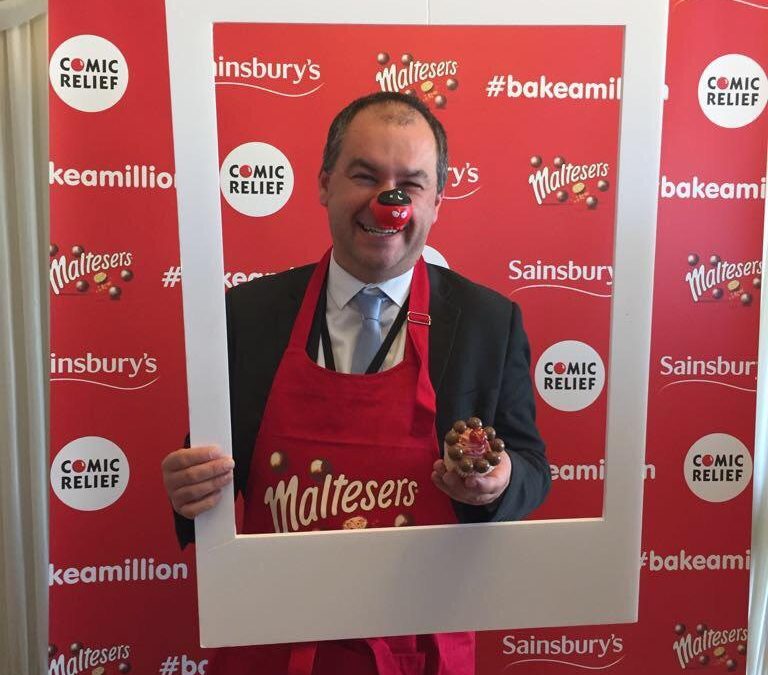
I was delighted to join fellow MPs at an event marking Red Nose Day 2017 in Parliament by taking part in the Maltesers® and Sainsbury’s Red Nose Day Parliamentary ‘Bake a Million’ competition.
Masterchef presenter Gregg Wallace took on the role of judge as more than 60 MPs of all parties competed to win. Many congratulations to Ian Murray MP who emerged triumphant and Ian Paisley MP who was the runner-up.
The competition, which was organised by Maltesers® in partnership with Sainsbury’s – the official retailer of the iconic Red Nose and Red Nose Day merchandise – was held to celebrate this year’s Red Nose Day.
MPs were tasked with decorating a cupcake with an array of icing and toppings, including Maltesers® and Malteaster® Bunnies, expertly instructed by apprentices from Sainsbury’s recently opened Bakery College in Bromley-by-Bow. The winning cake decorators chose a nominated Comic Relief project to which Maltesers® and Sainsbury’s will make a donation.
The Maltesers® #bakeamillion campaign calls on the nation’s support and encourages people to get baking with Maltesers®. For each cake or bake photo uploaded, Maltesers® will donate £5 to Comic Relief, towards their £1million total contribution.
Emma Freud, Red Nose Day director, said: “It’s great that so many parliamentarians turned out to support Red Nose Day. What Sainsbury’s and Mars have created is a campaign that the UK has embraced. Our baking kits were a total sell out and the excitement they have generated about Red Nose Day has been glorious. It was excellent to see the MPs embrace a baking challenge. Gregg and I are just relieved they don’t do this for a living.”
Fabio Alings, Maltesers® Brand Director at Mars Chocolate UK said: “It was great seeing MPs and peers getting involved with our #bakeamillion competition, as this really captured what the Maltesers® campaign is all about. The work Comic Relief does across the UK and Africa is crucial, and what we do to support is as important as ever. We are pulling out all the stops, with the help of MPs, to raise significant funds for this fantastic cause.”
Pete Ward, Sponsorship Manager at Sainsbury’s said: “I’m sure there will be a lot of cakes being decorated all over the country as our colleagues and customers raise funds for Red Nose Day again this year, so to have so many MPs and peers come along and demonstrate their skills really was the icing on the cake. Sainsbury’s colleagues and customers raised over £12.4 million last Red Nose Day. We’re hoping that our efforts this year will continue to make an even bigger difference to those in need, both in the UK and across Africa.”


