
by Paul Scully | Apr 4, 2017 | News |
I am supporting Bowel Cancer UK’s campaign to urge more people to take part in bowel cancer screening and save lives, as part of Bowel Cancer Awareness Month in April.
More than 44 people die from bowel cancer every day in the UK, it’s the nation’s second biggest cancer killer. However, it shouldn’t be. It’s treatable and curable, especially if diagnosed early.
Bowel cancer screening can save lives but at the moment in some areas of the UK only a third of those who receive a test complete it. Thousands of people are missing out on the chance to detect bowel cancer early when it is easier to treat.
I am totally committed to improving uptake rates for bowel cancer screening, both locally and nationally. I would urge my constituents who are sent a bowel screening test to use it. Taking part in bowel cancer screening is the best way to get diagnosed early. If you are over 60, take the test when you receive it in the post. If you are younger, tell the people over 60 in your life to take the test. Early diagnosis really can save lives.
Deborah Alsina, Chief Executive of Bowel Cancer UK, said, “I’d like to thank Paul Scully for supporting our campaign during Bowel Cancer Awareness Month to raise participation levels for bowel cancer screening. One in 14 men and one in 19 women will be diagnosed with bowel cancer during their lifetime but it is treatable and curable, especially if diagnosed early.”
The NHS Bowel Cancer Screening Programme can detect bowel cancer at an early stage in people with no symptoms when it is easier to treat. If you’re registered with a GP and aged 60-74, you will receive a test in the post every two years. You carry out the simple test at home in private and it comes with step by step instructions. The test looks for hidden blood in your poo, which could be an early sign of bowel cancer.
Visit Bowel Cancer UK’s website to find out how you can get involved in their campaign for Bowel Cancer Awareness Month.

by Paul Scully | Apr 3, 2017 | News |
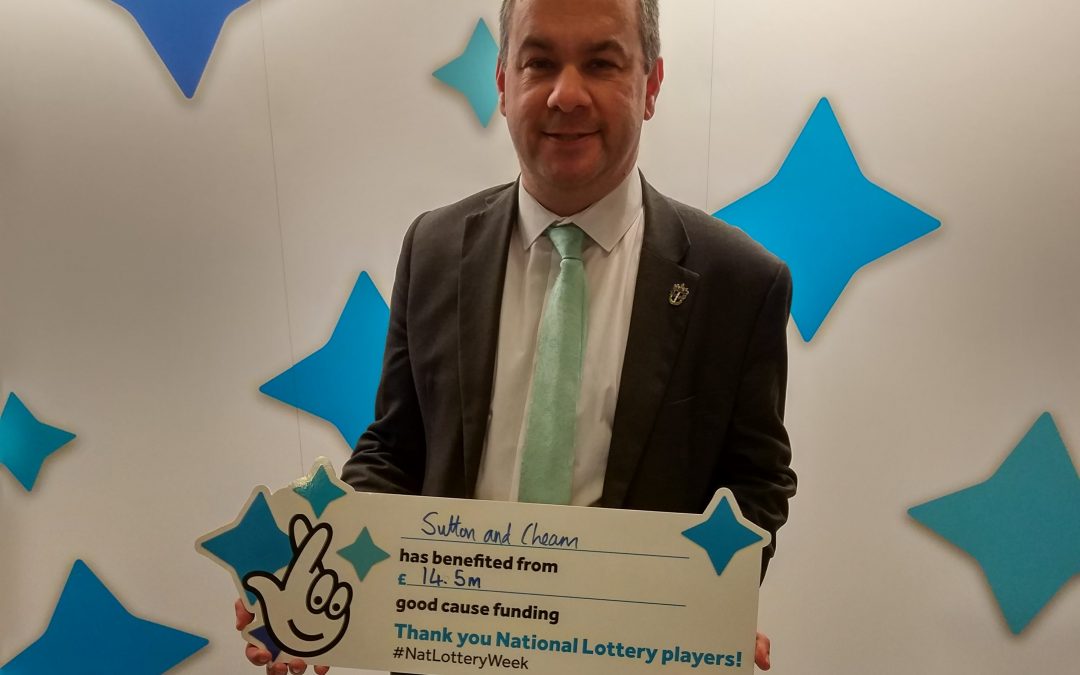
Following National Lottery Week in Parliament, I want to thank National Lottery players in Sutton, Cheam and Worcester Park for their role in raising over £30 million every week for good causes, and I would urge more local arts, sports, heritage and community groups to apply for National Lottery funding.
Since the National Lottery started in 1994, £14,416,916 of funding has gone to 295 projects in Sutton, Cheam and Worcester Park. So, while National Lottery funding has already made a massive difference in the area, there is still more money available that could be just the ticket for local sports clubs, and arts, community and heritage groups.
Most people play The National Lottery to win, but the reason it was set up in the first place was to fund good causes. National Lottery players have already helped countless local groups, but so many more could still benefit from funding. For example, it can be used to buy equipment, modernise your facility, train volunteers, make a film, or organise an event, activity or performance. I’d strongly urge everyone involved in something like this to consider applying for National Lottery funding.
National Lottery Week in Parliament raised awareness of the funding available and demonstrated how National Lottery players’ money is changing people’s lives and improving their well-being. National Lottery funding is awarded in Sutton, Cheam and Worcester Park by the Big Lottery Fund, Heritage Lottery Fund, Sport England, Arts Council England, British Film Institute and UK Sport.
Local groups can find out more about National Lottery funding and how to apply for it by visiting their website here.

by Paul Scully | Mar 30, 2017 | News |
The conflict in Yemen has had a devastating impact on children, so I joined other MPs at an event in Parliament, hosted by Save the Children, to discuss the work they and the UK government are doing to help the children of Yemen.
I am pleased that the Government is working in Yemen to address the urgent humanitarian needs and support an effective international humanitarian response. Ministers have more than doubled our humanitarian funding to Yemen over the last year, making the UK the fourth largest donor to the humanitarian crisis. We are providing vital medical supplies, water, food and nutrition, and emergency shelter to those most in need and have so far supported more than 1.3 million Yemenis. We need to build resilience and protect key institutions to help lay the foundations for post-conflict recovery.
Ultimately, a political solution is the best way to bring long-term stability to Yemen and end the conflict. The suffering of the people of Yemen is deeply concerning, which is why making progress on peace talks is the top priority. The UN has drawn up a road map for ending the conflict, which outlines the security and political steps the parties must take.
The UK is taking a central role in this and in the effort to garner the necessary support for the pending UN resolution that supports it.
by Paul Scully | Mar 29, 2017 | News |
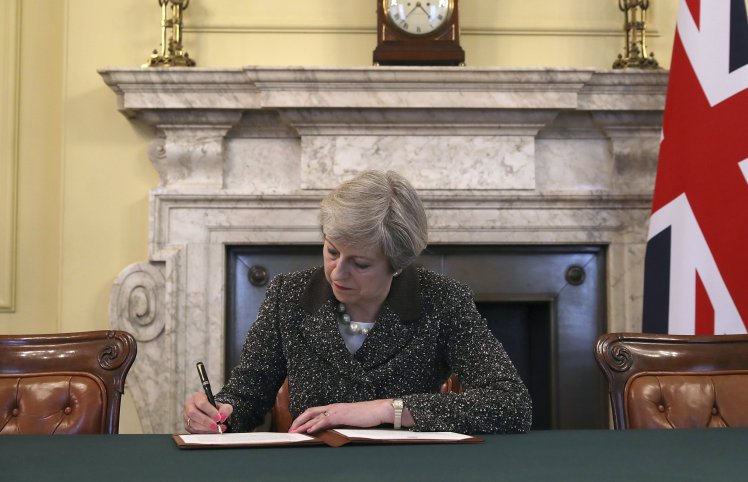
Today, a letter from the Prime Minister formally invoking Article 50 to begin our exit from the EU was delivered to the President of the European Council.
Sutton joined me in voting to leave the EU. However, I am committed to making sure that Brexit works for everyone, including those who voted to remain.
The Lib Dems’ continued attempts to block and frustrate the triggering of Article 50 just prolongs the uncertainty.
I am keen that we move quickly in our talks to give EU citizens in the UK and British people living abroad the assurances that they need to continue their lives without concern.
Legislation to invoke Article 50 was passed in Parliament with a huge majority and we have begun the process of leaving the EU. Rather than rehearsing last year’s arguments, I am concentrating on making sure that we focus on particular sectors and communities to get the best possible bespoke deal.
I will continue to relay your views and concerns to the Prime Minister and the government, ensuring that your voices are heard and the final deal is one that will work for everyone.
I did just that today when I asked the Prime Minister if she agreed with me that now is the time to stop the posturing and get on with getting a good bespoke deal for all sectors and communities in the UK. I am pleased that she agreed and you can watch that exchange here.
by Paul Scully | Feb 14, 2017 | News, News |
From the body of Alan Kurdi, the three year old boy washed up on on a beach near Bodrum, to the bewildered boy sitting upright covered in dust and encrusted blood in a hospital in Aleppo, images from the atrocities in Syria and their fall out have been pulling at the emotions of people in the West for years now. People feeling helpless in their comfortable homes, rightly demand that their government acts to tackle the misery, the pain and the suffering felt by those fleeing for their lives, especially the children that have known nothing else.
However difficult to see, working out how we can help every child in every circumstance, we need to remain focused, making sure our support has the best effect on as many lives as possible. This is how I have based my approach to voting in Parliament and I am pleased to say this is how the UK government has approached its policy. Some clickbait media write deliberately provocative articles, either through misinformation or by exclusion. The refugee crisis is complicated. That’s why it is still an issue years after the Syria crisis started. It can’t be boiled down to a three line article throwing accusations without any attempt to explain the background that has led to much debate in Parliament and in the Council of Europe. People may not accept the UK government’s approach but I still believe it to be the right one and it deserves the chance to explain its reasoning.
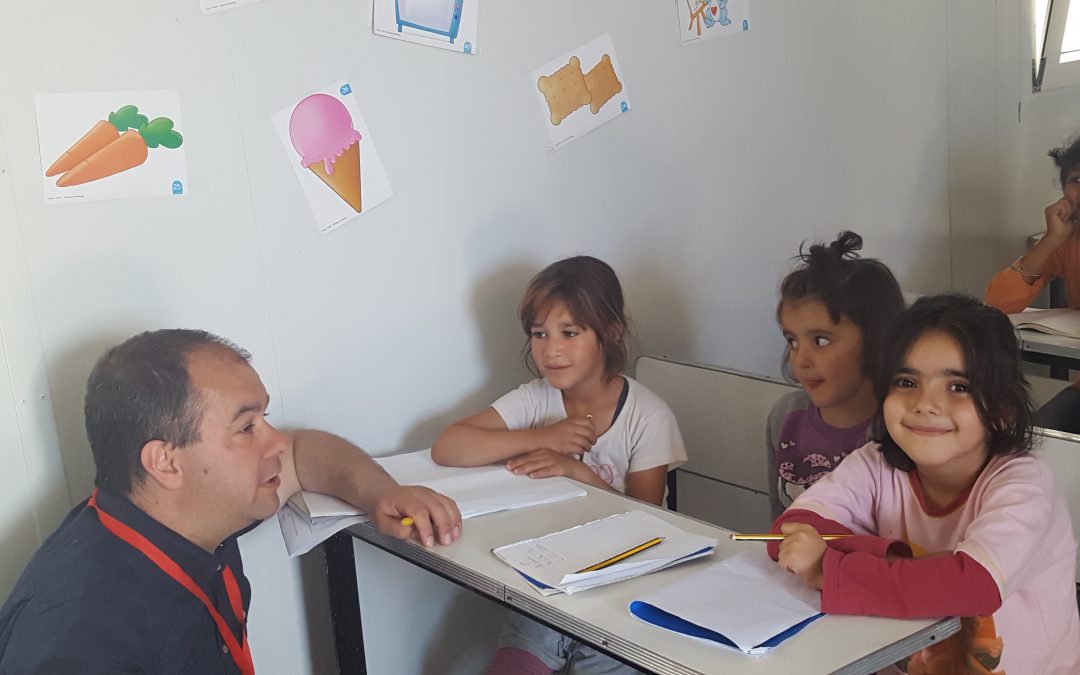
From the beginning, the UK government took the view that it was best to support refugees as close to their homes as possible. Most Syrians do not want to permanently relocate across the other side of the world. They just want peace and the ability to go back, return to their homes and start once again to educate their children. The UK has been a major supporter of humanitarian aid in Syria, Lebanon (the country with the most refugees per capita) and Jordan (number 2 in the list), second only to the USA with more than £2.3bn of our aid budget providing places of safety where we are caring for more than a million people. The government has taken the view that this approach reduces the pull-factor that encourages people into the hands of human traffickers, making the perilous journey across the sea. I have been to the Moria hot-spot on the Greek island of Lesbos with a delegation of European politicians all members of the Council of Europe. We saw a protest of predominately North African migrants who pelted our bus, complaining that Syrians were getting preferential treatment. Regular fires break out on the camp burning down tents and often ending in fatalities. I met children who were able to receive some education in makeshift camps run by the Greek navy in Athens. There I met a Yazidi Christian from Iraq who explained how he and his five children fled from Daesh, crossing the mountains and making that boat trip. The youngest of his children was only 10 days old at the time they travelled. Bearing in mind the modus operandii of those making the crossing is to deliberately capsize the boat when approached by a boat from the navy to force them to be rescued and relocated, it is a miracle that this tiny scrap of a lad managed to survive. He did and was a healthy 3 month old when I saw him.
I also saw the makeshift camp in Syntagma Square, Athens’ equivalent of Trafalgar Square where migrants who were mistrustful of the authorities camped down each night rather than going to one of the formal camps. They had arrived believing that they would be able to travel freely to a country of their choice, predominately Germany, Sweden, Norway and Switzerland, only to find that the borders have been shut and they were stuck in Greece with no prospect of moving on. This situation had been exarcebated by Angela Merkel’s short-lived offer to allow 1 million refugees to come to Germany. She shut the border within a week and admitted that she was unprepared. In the meantime, 200,000 migrants had walked across Slovenian countryside (population 2m), tensions in Hungary grew and Macedonia closed their border with Greece trapping people in the most terrible conditions by the border. Essentially this started with a kneejerk policy, undoubtedly well-intentioned, but with little regard to the likely consequences. It started as a reaction to the photo coverage rather than a response to a review of what was possible. The UK has taken another tack based on refugees closer to the conflct zone, one which the Commissioner for Human Rights at the Council of Europe told me with hindsight was the correct decision.
We have a number of schemes for resettlement beyond the Dubs Amendment. We will resettle 20,000 Syrians over the course of this parliament and we will also resettle 3,000 children and their families from the wider region. In the last year, the UK has granted asylum or another form of leave to over 8,000 children and of the 4,4000+ individuals resettled through the Syrian Vulnerable Persons Resettlement Scheme so far, around half are children.
This week the Government announced that in accordance with section 67 of the Immigration Act (known as the Dubs amendment), they will transfer 350 children to meet the intention and spirit behind the amendment. This number includes 200 children already transferred from France and will include a further 150 over the coming months. The scheme has not closed as has been reported by some. The legislation obliged the government to put a specific number on how many children they would take based on a consultation with local authorities about their capacity. We need to make sure that these children have the intense level of support and care that they need.
I am not aware that Sutton council is suggesting that they have extra capacity. I would be surprised given the number of local people who come to my surgery about their emergency accommodation which is located out of borough in places like Mitcham, Thornton Heath and South Norwood. However if they have, like any council, they can still participate in the National Transfer Scheme. Each year the UK has around 3,000 unaccompanied asylum seeking children arrive in Britain and currently a small number of councils are taking a disproportionate share of the burden in caring for these children. Kent alone, supports almost a quarter of all child refugees in Britain. That’s five times more than the whole of Scotland – and 12 times more than Wales.
The only way to solve this crisis is to end the conflict; anything else is a method to manage it. The UK is in an incredibly difficult position as are other European countries. For every child taken in from one country, another stays behind elsewhere. However in the meantime the UK will continue to play its important role in supporting people fleeing from conflict, each and everyone a human being with a tragic story, not just a statistic.
by Paul Scully | Feb 10, 2017 | News |
Londoners are looking to get energy savvy and help keep their bills down, according to new figures revealed by British Gas.
Sutton and Cheam has been revealed as one of the ‘smartest’ areas in London, with more than 5,600 British Gas smart meters installed in the area so far, helping thousands of residents monitor their household energy use every day.
British Gas published the figures as it installed its 3 millionth domestic smart meter this month. Smart meters come with a display monitor that shows how much energy is being used in near real-time, in pounds and pence, allowing customers to see how much they are using and know exactly how much it is costing.
One British Gas customer said: “The installation went really smoothly and the engineer gave us lots of tips about how to get the best from our meter and display. Living in a big house, we were really keen to understand how much energy we use.
“We’ve definitely changed our behaviour now we can see exactly what we’re using and when. We’ve reprogrammed the timer on our boiler so we don’t heat the house when we don’t need to and it’s really interesting to see which appliances use lots of energy and those that use very little. We’re far more aware of what we’re using now which is helping us to be more energy efficient.”
Craig Hart is one of hundreds of British Gas Smart Energy Experts installing smart meters in homes across the capital. He said: “More and more people are recognising the benefits of running their homes efficiently, which is demonstrated by the fact we’ve now installed 3 million smart meters in homes around Britain.
“In London, we’re increasingly seeing households take control of their energy usage by upgrading to smart meters, so they can ee their consumption in pounds and pence. Smart meters also send accurate meter readings to us, if you’re a British Gas customer, which means an end to estimated bills.”
To find out more about smart meters or to check whether you’re eligible for smart meters visit the British Gas website here.
LONDON’S TEN ‘SMARTEST’ CONSTITUENCIES
|
#
|
MP Constituency
|
Total smart meters installed by British Gas
|
|
1
|
Bromley and Chislehurst
|
7,150
|
|
2
|
Ilford South
|
7,140
|
|
3
|
Bexleyheath and Crayford
|
6,710
|
|
4
|
Croydon North
|
6,590
|
|
5
|
West Ham
|
6,390
|
|
6
|
Dagenham and Rainham
|
6,080
|
|
7
|
Kingston and Surbiton
|
6,060
|
|
8
|
Mitcham and Morden
|
5,960
|
|
9
|
Sutton and Cheam
|
5,700
|
|
10
|
Croydon Central
|
5670
|

