Suppose that once a month, ten men go out for beer and the bill for all of them comes to £100. If they paid their bill the way we pay our taxes and claim State benefits, it would go something like this:
The first four men (the poorest) would pay nothing. The fifth would pay £1.The sixth would pay £3.The seventh would pay £7.The eighth would pay £12.The ninth would pay £18.And the tenth man (the richest) would pay £59.So, that’s what they decided to do. The ten men drank in the bar every month and seemed quite happy with the arrangement until, one day, the owner caused them a little problem. “Since you are all such good customers,” he said, “I’m going to reduce the cost of your weekly beer by £20.” Drinks for the ten men would now cost just £80.
The group still wanted to pay their bill the way we pay our taxes. So the first four men were unaffected. They would still drink for free but what about the other six men; the paying customers? How could they divide the £20 windfall so that everyone would get his fair share? They realised that £20 divided by six is £3.33 but if they subtracted that from everybody’s share then not only would the first four men still be drinking for free but the fifth and sixth man would each end up being paid to drink his beer.
So the bar owner suggested a different system. The fifth man, like the first four, now paid nothing.The sixth man paid £2 instead of £3 .The seventh paid £5 instead of £7.The eighth paid £9 instead of £12.The ninth paid £14 instead of £18.And the tenth man now paid £49 instead of £59. Each of the last six was better off than before with the first four continuing to drink for free.
But, once outside the bar, the men began to compare their savings. “I only got £1 out of the £20 saving,” declared the sixth man. He pointed to the tenth man, “but he got £10!”
“Yes, that’s right,” exclaimed the fifth man. “I only saved a £1 too. It’s unfair that he got ten times more benefit than me!”
“That’s true!” shouted the seventh man. “Why should he get £10 back, when I only got £2? The rich get all the breaks!”
“Wait a minute,” yelled the first four men in unison, “we didn’t get anything at all. This new tax system exploits the poor!”
So, the nine men surrounded the tenth and beat him up. Funnily enough, the next month the tenth man didn’t show up for drinks, so the nine sat down and had their beers without him.
But when it came to pay for their drinks, they discovered something important – they didn’t have enough money between all of them to pay for even half the bill.
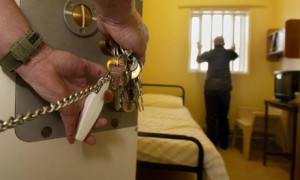
There has been a lot written about whether prisoners should get the vote and what we should do about the European Court of Human Rights. Both of these are highly emotive issues and so it is important that we look at the facts and respond in a sustainable manner. There is no point kicking off about something if the Government will end up having to comply anyway.
So first of all let’s look at the original ruling which was made with 12 Judges in support and 5 voting against. The Grand Committee report of 6th October 2005 said:
“The Court accepts that this is an area in which a wide margin of appreciation should be granted to the national legislature in determining whether restrictions on prisoners’ right to vote can still be justified in modern times and if so how a fair balance is to be struck. In particular, it should be for the legislature to decide whether any restriction on the right to vote should be tailored to particular offences, or offences of a particular gravity or whether, for instance, the sentencing court should be left with an overriding discretion to deprive a convicted person of his right to vote. The Court would observe that there is no evidence that the legislature in the United Kingdom has ever sought to weigh the competing interests or to assess the proportionality of the ban as it affects convicted prisoners. It cannot accept however that an absolute bar on voting by any serving prisoner in any circumstances falls within an acceptable margin of appreciation. The applicant in the present case lost his right to vote as the result of the imposition of an automatic and blanket restriction on convicted prisoners’ franchise and may therefore claim to be a victim of the measure. The Court cannot speculate as to whether the applicant would still have been deprived of the vote even if a more limited restriction on the right of prisoners to vote had been imposed, which was such as to comply with the requirements of Article 3 of Protocol No. 1.”
I have put in bold the key sentences as I see them in this ruling. It is also worth noting that the Court did not award Mr Hirst any compensation, although it was galling to see that he was awarded £23,000 costs despite the fact that he was on legal aid. His solicitor charged £300 per hour – nice work if you can stomach it.
So the Court says that it is up to Parliament to decide on whether we should give prisoners the vote but we haven’t discussed the matter for a while and the Court wouldn’t be happy if the UK kept a blanket ban. Can you spot the obvious contradiction here? Ken Clarke’s ‘best legal advice’ seems to ignore the first part of this and concentrate on keeping the Court happy.
The recent motion debated in Parliament, to my mind, complies with the demand that Parliament should ‘weigh the competing interests or to assess the proportionality of the ban’. Therefore we are left with the second contention, that a blanket ban is not appropriate. This isn’t a ruling but clear guidance on what the Court is likely to decide should another case be brought. The motion acknowledged the treaty obligations of the UK so no-one voted on whether to ignore the Court outright, although there was very much a mood to do so from many in the Chamber.
The media have covered in detail the story of the man who brought the case to court, John Hirst. He is a particularly odious man who killed his landlady with an axe. Having a battle about human rights with someone who thought nothing of extinguishing the life of an innocent woman is simply galling. He runs a blog which, quite frankly, you can look up yourself. In it, he thinks nothing of resorting to offensive insults and meandering rants when he can’t summon up a coherent argument. After calling Priti Patel a ‘paki‘, he said of the London-born MP, ‘Unlike the foreign import Patel, I am a Brit born and bred.’ This, because she has been vociferous in disagreeing with Hirst.
My view, which chimes with the majority of those MPs who voted, is that we shouldn’t give prisoners the vote, least of all to brutal murderers like John Hirst, who despite his protestations about rehabilitation and human rights is a nihilist, interested in nothing but himself and his self-gratification. Therefore, the question is do we risk a follow-up case and possible compensation payments by ignoring the ruling or do we do the bare minimum to comply?
The legal advice given to the Lord Chancellor is that the vote should be given to prisoners serving a sentence of four years or less. This seems to be on the basis that this largely excludes violent offenders. This still sounds arbitrary to me. Supporters of votes for prisoners make much of the role that this would have in rehabilitation. Former jail-bird politician, Jonathan Aitken, was very sceptical of this position in an interview with the Daily Politics. If it was decided that we should try to comply with the ruling, one solution may be to allow prisoners in the final six months of their sentence the vote, rather than looking at the sentence as a whole. This would go some way to complying with the ruling whilst demonstrating a clear reasoning behind the decision, gradually reintroducing prisoners to the idea of reentering society.
However my position is not to compromise. The Conservative manifesto pledged to introduce a British Bill of Rights. The coalition has changed this somewhat, with a Commission being set up to look into the matter. This is usually a kick into the long grass. I hope not too long. Yes we were one of the original signatories to the European Convention of Human Rights, but, as so many things European, we still remain with an out of date solution to a problem that barely exists. The EHCR was set up in the wake of a destructive conflict that tore Europe apart. Nowadays, it keeps busy by dabbling in prisoner votes and whether sex offenders can apply to have themselves removed from the register. Surely the UK legislative and judicial systems are more than capable of tackling these issues?
One final thought; the very mention of Europe gets people hot under the collar about the EU. This is not connected to that thorny issue. Yes, leaving the EHCR and so, probably the Council of Europe will get members of the EU flustered, but it can and should be done. Muddling this up with a yes/no referendum will not help solve this issue, so we ought to tackle one thing at a time.
Just over a year ago, I posted a couple of videos showing Nudge theory at its best,with a staircase being converted into a keyboard to encourage people to exercise and a bin that plays a falling sound when something is thrown into it to push people into putting their rubbish where it belongs. Volkswagen created these videos and ran a competition to find a new idea. The winning entry, shown above is a fantastically creative way of looking at something that is the bane of many people’s lives. Swindon showed that speed cameras on their own are not effective. Maybe committing to the carrot rather than the stick is a better way forward after all?
There has been a lot written about tuition fees in the last few weeks and there will be plenty more next year when the rest of the changes are brought in. At the moment the only change in regulation has been the increase in fees to £6,000pa and £9,000pa. Separate amendments will need to be made to alter the interest rates, maximum repayment period and the minimum salary before repayments are collected. Despite the protests and newspapers’ column inches, there still appears to be a lack of understanding about how the changes will affect students and why the changes are being made.
I was opposed to the original introduction of tuition fees for many of the reasons that people are now up in arms about the increase. Since that time the number of students has increased by 44%. The choice to have as many students studying fulltime for a University degree is a political one and one that seems to be set in stone. Assuming that this won’t be reversed, the original Lib Dem position of scrapping tuition fees is simply not affordable.
Neither is the status quo. The Russell Group which represents 20 of the leading Universities suggested that they may have needed to go private, should the Browne Review not have recommended an increase in fees. This would have meant that they could charge what fees they wanted and demanded them up front. The London School of Economics, despite having a reputation of being a home for left-wing firebrands and having one of the largest banners at the protests, went one step further in commissioning a report on going private which was presented to their board.
This leaves two choices, an increase in fees or a graduate tax. The latter was looked at by Vince Cable but dismissed in favour of the former. Alan Johnson, the Shadow Chancellor originally called a graduate tax ‘unworkable’ until whipped in by his fledgling leader. There are a few problems with a tax. This would be become payable at the ridiculously low salary level of £6,475pa and would remain with you for the rest of your life; far more punitive than the current system. Any other change would have been difficult to collect. A tax would not be payable if the graduate moved abroad to work and there is no link between the amount payable and the service that the student received at university. The tax would lead to the richer paying less and the poorer paying more.
So we are left with an increase in fees. There seems to be 3 main concerns.
1. Will this stop poorer people going to university?
The BBC reported that a survey by Nat West showed 40% of sixth formers saying that tuition fees made them consider not going to university. The date of this response? 13th June 1999, the summer after David Blunkett first introduced fees. Since this time student numbers have increased substantially. Although £150million has been found to reduce the amount of fees payable by the poorest 20% of the population, no parents will need to pay as fees are not payable up front, students will only pay when they earn more than £21,000pa and the monthly amount payable will be less than at present.
2. Will it affect social mobility?
Social mobility starts at school. Poorer people are often held back from going to university because they don’t get the grades at A level in the first place. We need to ensure that opportunity exists far early in a student’s life. OECD figures show graduates earn around 50% more in their lifetime than non-graduates, with female graduates earning double their counterparts who finish education at secondary level.
Allowing the money to follow the student will allow them to consider their choice of course more carefully and make the university more accountable to them as a customer. People have been concerned about the future of some institutions. However, should it be right for one London university to be able to claim £50million in funding for students that don’t exist?
The higher £9,000 tuition fee charge will only be allowed if the university can clearly demonstrate that they are taking measures to further encourage social mobility. It was interesting to note a letter in the Daily Telegraph written by 18 Vice-Chancellors and Principals, expressing their fears of the effect on social mobility should the increase in fees not go through Parliament.
Is it fair?
In a word, yes.
It is only fair to taxpayers that students make a contribution towards their education. (Education can be considered a right, but further education is exactly that; education to further one’s development).
It is only fair to students that neither they nor their parents should have to find any money up front.
It is only fair to graduates that they should pay less than at present with many being £45 pm better off.
It is only fair to poorer students that they should only pay when they start earning a reasonable income, some 40% higher than under the present system.
There has been some concern about the effect on graduates getting mortgages. The Council of Mortgage Lenders has confirmed that lenders will not take the total debt into account when considering how much to lend. Unlike a personal loan, it is very difficult to default, with payments being taken at source, it is not repayable if unemployed or taking a career break and is automatically written-off after 30 years. The only effect that it will have is that repayments reduce disposable income. This is the case at present but since repayments will be lower, graduates will have more disposable income with which to service a mortgage.
Another concern has been the timing of the introduction of the higher fee structure. This will start in 2012 for new students. Existing students will not be affected as they will have already entered a contract with the university. Similarly the repayment structure will be introduced to come in later, as the 2012 students graduate so they will be coordinated.
The actions of a significant minority of students on the protests have done them no favours. They have good reason to debate this difficult issue but it needs to be done in an informed, sensible way. Smashing windows, pulling policemen off their horses and throwing fire extinguishers from a roof into a crowd does the student’s cause no good whatsoever. Instead, they should acquaint themselves with the facts on fees from this excellent website and then let us have a grown-up debate about this important decision.
Working in the Houses of Parliament often throws up something new and something surprising. A number of us were slightly perturbed when we saw this on one of the screens known as annunciators which lets everyone know what is happening in the House of Lords.
Thanks to the BBC website, I can tell you that it is not as fruity as it might suggest. The Lords has a dinner break and if nothing else is happening, they will ‘adjourn during pleasure.’ Similarly if the Lords has sent a Bill back to the Commons, they may adjourn during pleasure, waiting for the Commons to debate the matter and refer it back. This sometimes happens with controversial pieces of legislation that are debated long into the night, with the two Houses playing ping-pong. The Commons usually gets its way in the end.


 Suppose that once a month, ten men go out for beer and the bill for all of them comes to £100. If they paid their bill the way we pay our taxes and claim State benefits, it would go something like this: