by Paul Scully | Mar 2, 2016 | News |
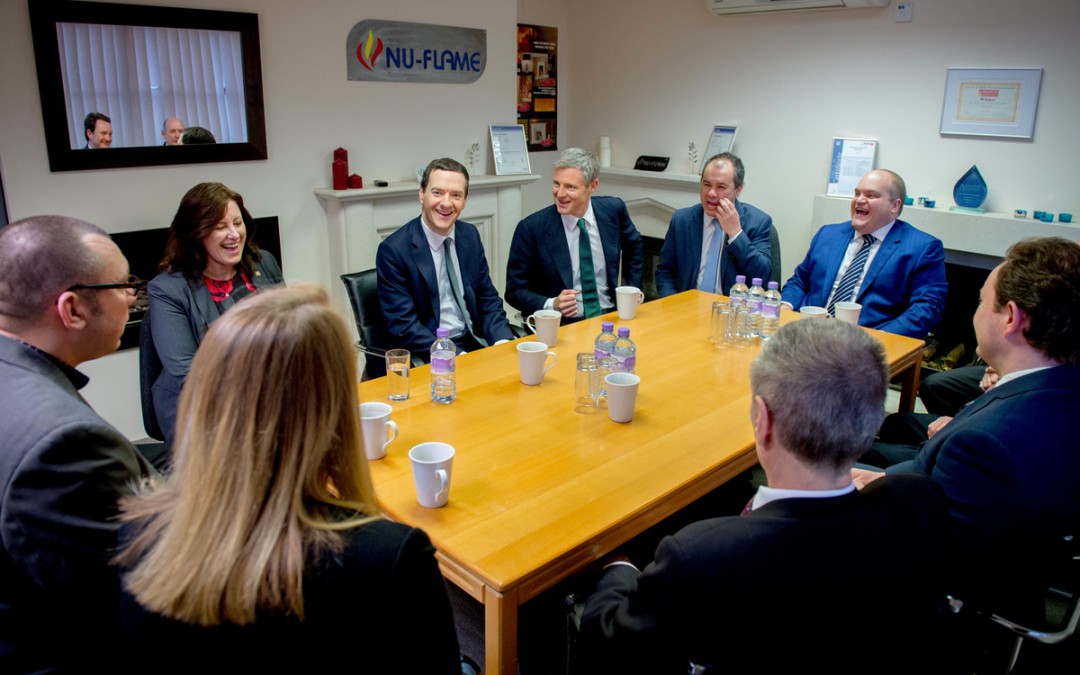
Recently I brought Zac Goldsmith, Conservative Candidate for Mayor of London, and the Chancellor George Osborne MP, to Sutton.
They joined me, our local Conservative London Assembly Member Steve O’Connell, and a delegation of local businesses to talk about how extending the tram to Sutton could really benefit the town centre and drive growth.
Steve said: “I have been pressing Boris for this for some time and know that he is supportive. He and I both want to see the Tram delivered to Sutton. There is an absolute need, however, for the Council to contribute to the project in a meaningful way, and up to now this has not been forthcoming. I am delighted that Zac has recommitted to the Tram Extension, and will provide the leadership needed to make this happen.”
Steve, Zac and George joined me on a tour of Nu-flame on the Kimpton Park Industrial Estate, where they tried their hands at some riveting and folding metal.
They also outlined new funding opportunities available to deliver the Sutton Tramlink extension.
Zac said: “There are two options; one, we get a cheque from the Chancellor but given the constraints that the Government is facing that is unlikely. The alternative is devolution to enable us to benefit from the property uplift, we know that when you grow the transport network the first thing that happens is land value goes up. Where land is unlocked directly as a consequence of TfL investments it is not a big stretch that the property tax harvested off the back of that should be kept in London. It would enable us to be much more ambitious and bullish when it comes to making plans for transport link expansions.”
Chancellor George Osborne said: “We have to make sure we can afford it and of course London taxpayers want to make sure it is good value for money. How you pay for that is a big question in a country where we don’t want to raise taxes and want to make sure people can keep as much of their income as possible. Looking at new tax revenue that comes about because of a new Tramlink or new businesses being created or new homes being built I think is really exciting.”
We are finally getting closer to delivering the Tram extension. In the past the Mayor has tried, but the council have not backed up their eagerness with a solid commitment. The announcements today could take the ineffective Lib Dem council out of the picture, so we can get on and get the job done. I am excited at the opportunity these new funding arrangements have brought up, and I will be working with Zac, Steve and George to get this project delivered.
I would like to thank Nu-flame, a successful home-grown manufacturer for hosting us and to all the business leaders who joined us at this event.
by Paul Scully | Feb 26, 2016 | News |
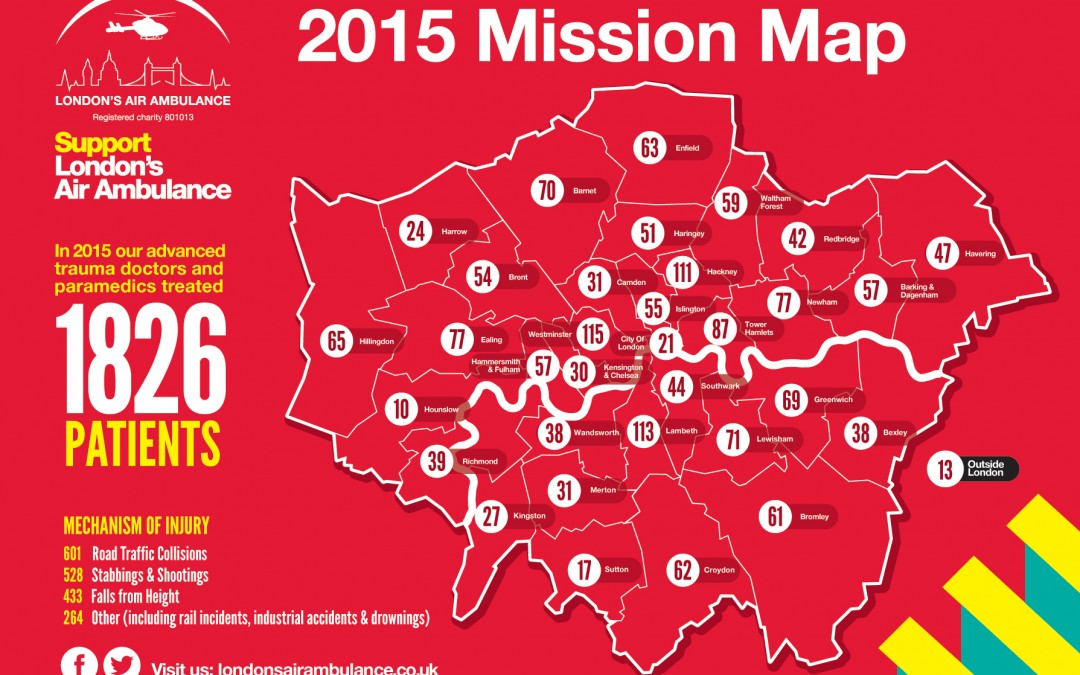
London’s Air Ambulance, the charity that delivers an advanced trauma team to critically injured people in London, treated 1,826 patients last year. The charity has released its mission statistics for 2015 today, to continue raising awareness of the work that it does 24/7 to help save lives in the capital.
Key statistics include:
- 17 patients were treated in Sutton last year
- Top three busiest boroughs include Westminster (115 patients treated), Lambeth (113 patients treated) and Hackney (111 patients treated)
- Busiest postcodes include N1 (38 patients treated ), W1 (32 patients treated), CR0 and SE1 (31 patients treated in each)
- Of the 1826 patients treated, the mechanisms of injury were:
- 33% (601) Road traffic collisions
- 29% (528) Stabbings and shootings
- 24% (433) Falls
- 14% (264) Other (including incidents on the rail networks, hangings and drownings)
The release of the London’s Air Ambulance mission statistics comes after the charity’s much needed second helicopter became operational for London last month. The G-LNDN registered MD902 Explorer is available to deliver its advanced trauma team to critically injured patients and became operational in time to cover for the charity’s first helicopter (G-EHMS) when it went offline for its annual maintenance.
I am pleased to see that there was such a small number of incidents in Sutton last year, but I still want to pay tribute to everyone who works for London’s Air Ambulance and thank them for the help they have given Sutton residents.
Graham Hodgkin, CEO of London’s Air Ambulance, said: “The charity is here to serve everyone in London. While our statistics show that we were busier in some areas of the capital than others, trauma can happen to anyone, anywhere, at any time. Trauma doesn’t have a postcode and neither do we. By releasing these statistics we are hoping to raise awareness of that fact.
“Now with two helicopters to maintain, and the extension of our daylight flying hours in the summer months, the cost of providing our service to London has increased to £6 million each year. Donations are needed now more than ever to maintain the delivery of our advanced trauma care to London, and I am urging people to please continue to support the charity, whether that’s donating, volunteering, taking part in an event or asking the organisation you work for to support us.”
London’s Air Ambulance treats on average five critically injured people in London each day, performing medical interventions at the roadside which are normally only found in a hospital emergency department. Barts Health NHS Trust provide the doctors and some financial support and the London Ambulance Service provides the paramedics and the emergency infrastructure to dispatch the service. The charity relies heavily on voluntary donations and has a world class reputation for delivering clinical innovation and excellence at the roadside. Since its inception 27 years ago, London’s Air Ambulance has treated over 34,000 patients. To find out more, you can visit their website.

by Paul Scully | Feb 24, 2016 | EU Referendum, National Campaigns, News, News |
The starting gun has been fired on a long campaign to determine the future of the UK in the world. There will be a lot of facts, figures, statistics, predictions and assumptions bandied about in the media and within campaign material from both sides. But it is essential to engage with this, as the once in a generation decision that we face on June 23rd will shape our country for decades to come.
For many years, I have been of the view that the UK can do better by ourselves than through continued membership of the European Union. Many people will share my concern about the lack of transparency and accountability of the EU. The fact that the accounts have not been given a clean bill of health by auditors for an incredible 21 years in a row demonstrates that there is no realistic way of following the money and scrutinising how our contributions are spent. Some people say that we contribute £23m per day to the EU, others say £55m. The overall cost or benefit of membership varies hugely depending on the source. Frankly, the fact that there is even a debate where the figures are so far apart suggests that we don’t even know what we are a member of. How can we help to reform an institution that no-one actually understands. Few people actually seemed to have realised that there was no exit mechanism from the EU until the Lisbon Treaty in 2010.
I support breaking down trade barriers which the single market aims to do. However I am concerned in equal measure by the walls that are built around the EU trading bloc instead, placing tariffs on goods coming in from many of our old trading partners outside the EU. The world has moved on since the Common Market came into being. Easier travel and the rise of the Internet has changed the face of world trade, bringing a global market to even many small companies in the developing world. The likes of Google, Starbucks and Amazon show how corporations are far more nimble than the unwieldy directives brought in through 27 member states. The disparate economies of the EU make collective decision-making incredibly difficult. The divide within the Eurozone with ailing economies like Greece and Spain in the south and the sizeable, mature economies in the north such as Germany and France, is extremely wide and means that a unifying economic policy will always create losers. This is why it was so important for the UK that we did not join the Euro. In the main part, our freedom to make our own fiscal and economic policy helped us weather the recession well and come out the other side with the fastest growing economy in the developed world, creating more new jobs than the rest of the EU put together.
The Eurozone countries will need to move at an increased pace towards a single European state. It is only by coming closer in this way that they will be able to meet the challenges that they face in keeping the Euro as a credible cohesive currency. If that is what those countries need to do, then that is fine. The UK should not be pushed into joining them. One of David Cameron’s negotiated positions was to stop us from such a move through a red card system. I want to go further, not just drawing a line in the sand, but returning powers to the UK. It isn’t that long ago when the public were up in arms about the Lisbon Treaty getting railroaded through the ratification process by Gordon Brown. That treaty brought in a permanent EU President and the equivalent of an EU Foreign Secretary. It reduced the majority requirements in the Council of Ministers and brought in greater centralisation.
I am really optimistic that as an independent nation, we can thrive in a global 21st century economy. Yes, there will be challenges. A vote to leave will start both the 2-year process to leave and a series of talks around the world to investigate bilateral trade agreements, especially with countries that are likely to dominate the coming decades, such as India. Remaining within the EU is arguably a bigger risk than leaving. The Eurozone countries will move closer together pushing the UK further to the periphery of what is already a trading bloc that is shrinking in terms of global market share. The EU’s share of global GDP has shrunk by one-fifth in the last twenty years and will continue in that direction. The UK is the world’s fifth largest economy, predicted to be behind only China, USA and India by 2030. We are the sixth largest manufacturer in the world, despite the nay-sayers who forget our much-valued precision engineering exports. We need to look further afield with our head held high.
The minor changes to entitlement to in-work benefits will not be enough to bring immigration under control. A four-year ban on claiming benefits has been watered down to a four year wait to claim full benefits, with a sliding scale in between. Similarly the ridiculous situation of UK taxpayers paying for child benefit to be sent to foreign national children abroad, instead of being abolished, has been restricted to an amount equivalent to the local living costs of that child, leading to the complication of a civil servant having to calculate and update 27 separate payment systems for child benefit. The biggest pull factor for migration remains our burgeoning economy, with our successful job creation. Therefore the UK will still remain an attractive option for people, especially if living in the Southern and Eastern European countries where the unemployment percentage is in many cases in double figures. The emergency brake that has been agreed is simply a short term measure which will fail to tackle a long term problem. The brake is also pulled by the EU, not the UK. Imagine having to ask your passenger to pull on the handbrake in an emergency and you will start to see the downside to this.
The only way to stem immigration is to control our own borders. This is not without complication. Our border with France is as a result of a bilateral agreement and so it shouldn’t automatically follow that France would end the pre clearance agreement if we were to leave the EU. Similar arrangements are in place in other parts of the world, such as the US/Canada border, which do not require any relationship beyond the agreement itself. Government policy is rightly to bring net migration down to the tens of thousands rather than the hundreds of thousands. The problem in trying to deliver this is that we have one hand tied behind our back, unable to do much about immigration from within the EU. This leads us to bear down incredibly heavily on immigration from outside the EU. Whereas this may be desirable to many, we simply don’t have any flexibility or choice which leads to a number of unintended consequences and inequitable situations. Curry restaurants are struggling to attract skilled chefs, whereas an unskilled European can come to the UK without question and more importantly, without prospect of a job.
I have heard the case put that our security would be at threat if we voted to leave the European Union. I see this as part of ‘project fear’ which seems to be coming from many in the ‘remain’ camp. NATO has done more to keep us secure than the EU. There are plenty of things that we will still need to co-operate on if we were to return to being an independent nation. Pollution, security, immigration do not stop at the Channel. We can still share intelligence and work on better agreements for extradition and policing. We need to ensure that we agree and share environmental initiatives. None of this joint working requires membership of the unaccountable, bureaucratic, outdated and inward-looking EU. Our response to the closure of steel plants in the UK was hampered by EU State Aid rules. We cannot even stop charging VAT on tampons without seeking the agreement of all 27 member states, leaving women to pay extra for them as ‘luxury items’, the so-called ‘tampon tax’, as a result of cumbersome EU tax rules.
Some people cite the ability to move around Europe not having to change money whilst on holiday and that the EU has reduced roaming charges whilst they are away. We are not and have never been in the Schengen Agreement which allows for open borders but we can still get around freely once we’ve crossed onto the European mainland. That needn’t change with a sensible agreement. We can celebrate the EU for centralising phone charges or go out and get a contract on the Three network where they’ve scrapped roaming charges entirely – testament to the free market and open competition.
There are many models that we can look at when considering how to thrive outside the EU. Norway and Switzerland do pretty well for themselves. Remainers are concerned that those countries are restricted by regulations without power to change. I would contend that our power to change is minimal and that EU regulations restrict us for all our business including trade simply within the UK, unlike those countries. 28.4% of our GDP is from exports, of which 44.6% went to EU countries. That leaves 87.2% of UK sales undertaken here in the UK between British companies and customers or with countries outside the EU. Despite only 13% of our sales being with the EU, regulations are applied to everything. That is not the same as Norway and Switzerland, who happen to be the first and second most prosperous countries in the world. I guess it’s working for them. The deal negotiated by our PM is a useful safety net should we vote to stay in the EU. However it is not finalised. The President of the EU Parliament is on record as saying that it is not legally binding and may not be ratified by the Brussels Parliament, so pro-EU voters will be going in to vote on trust that politicians that they have never heard of and led by a man who sees Britain as a pain to be dealt with, will accept our terms. A vote to remain will mean business as usual for the EU bureaucrats.
This is a complicated issue. There is a risk in leaving. I believe there is a greater risk in staying. The PM’s negotiated settlement is as good as it will get. If we vote to stay, other EU leaders know what they need to offer to keep countries subdued and content with the status quo. Leaving is not about isolating ourselves from the rest of the world. Instead it is grabbing the opportunity to look further afield, to new opportunities with partners that are racing ahead of the old world. I hope that people will take the time to read up on the options but I also hope that they’ll agree with me that with life outside the EU, as a country in control of its own destination, we can look forward to an exciting, prosperous new chapter in our great nation’s future.

by Paul Scully | Feb 12, 2016 | News |
Earlier this week I attended the launch of a new Foundation in the Houses of Parliament to help tackle housing problems faced by ex-service personnel.
The cross party Homes for Heroes Foundation has been launched by former Housing Minster Grant Shapps MP, fellow MP Jake Berry and General Lord Richards, the former Chief of the Defence Staff.
Today, many soldiers leave the armed forces after years of serving their country around the world and face an uphill battle to find a home for themselves and their families. There may be several reasons for this: some veterans suffer permanent physical injuries or post-traumatic stress disorder; others are healthy in body and spirit but have sacrificed the ability to put down roots, whilst serving abroad.
The inspiration for this foundation is the upcoming centenary of the Housing Act 1919 where Prime Minister David Lloyd George promised ‘homes fit for heroes’ for soldiers who had returned from the battlefield of Europe.
The goal of the Foundation is to update Lloyd George’s vision for the 21st Century so that Britain has the finest housing package for returning armed forces of any country in the world. Over the course of this Parliament, the Homes for Heroes Foundation plans a programme of research to guide the housing policy objectives and to get a better deal for veterans.
At the heavily attended launch there were representatives from armed forces charities, housebuilders, housing associations, local authorities and also parliamentary colleagues.
Grant Shapps said, “These brave men and women fight for our country and now the Homes for Heroes Foundation will fight for them to get better homes when they return.”
It was a pleasure to help support the launch of the Homes for Heroes Foundation. I look forward to working with them as they seek to address problems faced by veterans when it comes to housing. After their selfless service, making sure they have a home to come back to is the least we can do.
by Paul Scully | Feb 8, 2016 | News |
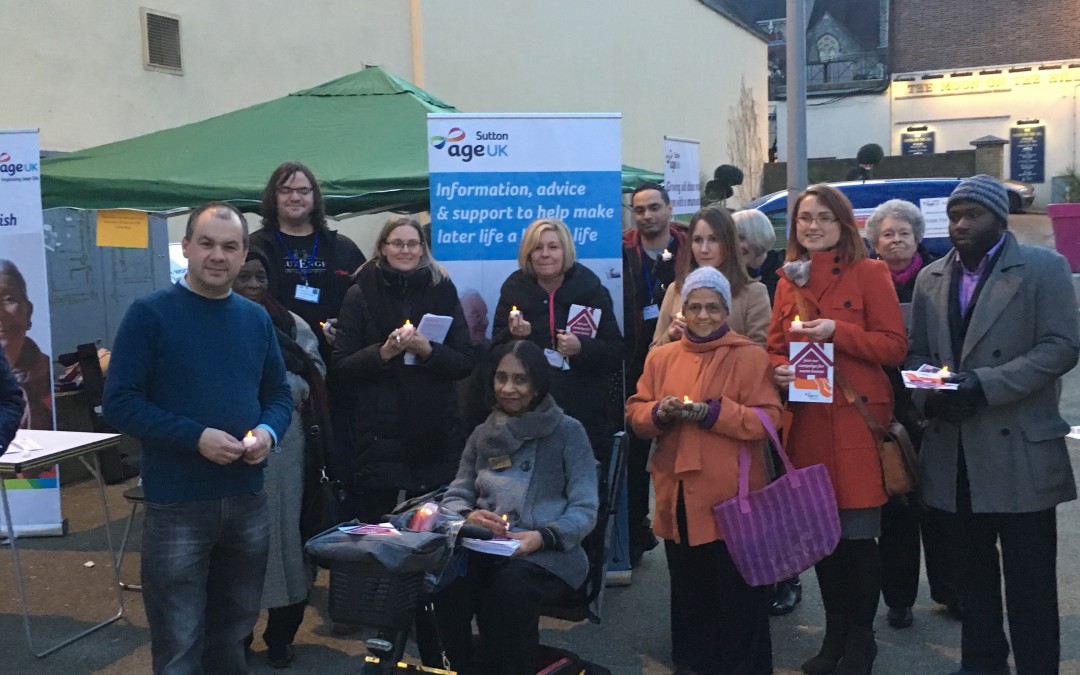
Last week I attended a candlelight vigil in memory of elderly people who had lost their lives to the cold as part of Age UK’s Cold Homes Week.
I believe that it is vital for the Government to do as much as possible to help those struggling to pay their energy bills, and I very much welcome that the Energy Secretary, Amber Rudd, has confirmed that her department will deliver on its promise to insulate a million more homes over the next five years.
Households struggling with their bills are eligible for insulation measures, including solid wall insulation, through the Energy Company Obligation (ECO) scheme. Homeowners and those in privately rented homes who are on specific benefits may also be eligible for support towards heating improvements, including oil-fired boiler replacements, through ECO Affordable Warmth.
In the recent Spending Review, the Chancellor announced a new energy efficiency supplier obligation from 2017 which will be more focused on those that need the help the most. This will replace ECO in 2017, and run for five years.
To help ensure that households at risk of fuel poverty can afford to heat their homes, the Government has committed to continue the Warm Home Discount scheme. This helps more than 2 million households a year with £140 to go towards their energy bills. Pensioners also get further help through the Winter Fuel Payment.
I believe that with its commitment to helping the most vulnerable insulate their homes and with the extra financial support, the Government is working hard to help those most struggling with energy bills.
I want to thank Age UK Sutton for having me and to everyone I met there for taking the time to talk to me. You can find out more about the ECO Scheme here and you can find out more about Age UK Sutton here.
by Paul Scully | Feb 5, 2016 | News |
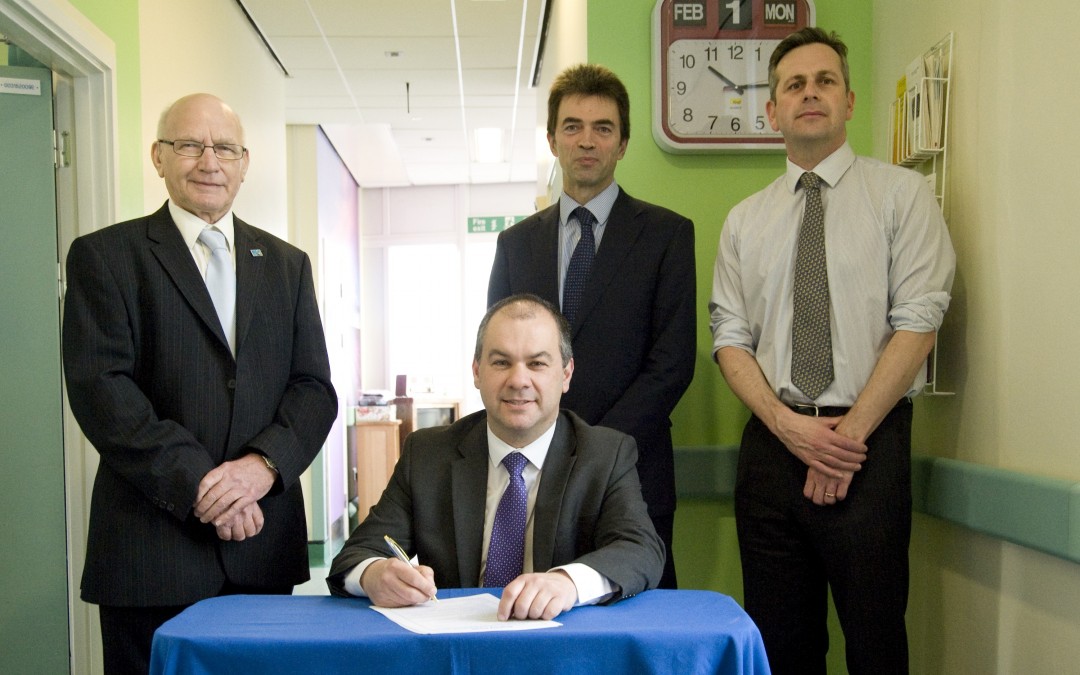
On Monday, I joined Epsom and St Helier Hospitals NHS Trust and signed up to the National Pensioners’ Convention (NPC) Dignity Code, reaffirming my support for the trust’s ongoing commitment to providing elderly people with the care they deserve.
I was joined by Chief Executive Daniel Elkeles, as well as special guests from the NPC and Sutton Seniors’ Forum, at the event organised by Barry Todman, Chairman of the London Region National Pensioners’ Convention.
Daniel said: “I was really pleased to be invited to sign the Dignity Code, which draws together some of the most important principles of caring for elderly people with the dignity they deserve. I am proud to say that our hospitals are already leading the way when it comes to providing outstanding care for our older patients, and formally endorsing the Dignity Code is further evidence of our commitment to continue providing them with the best possible care.”
 The signing was particularly significant as it happened on Dignity in Action Day. It also gave me and the other guests the opportunity to have a tour of the C2 Ward at St Helier, which has a special focus on caring for patients living with dementia.
Daniel explained: “C2 is a newly adapted ward, which has been specifically designed to include features known to help people with dementia feel less disorientated or confused, providing an environment which will allow the delivery of personalised care based on the specific needs of patients with dementia.
“My thanks to Carole Webster, Deputy Chief Nurse, Debi Miller, Older Persons’ Assessment and Liaison Lead Nurse, and the team on C2 for giving us a tour of the ward and telling us about some of the fantastic work they are doing.”
I also want to thank Daniel, the Sutton Seniors Forum (SSF), the NPC and all the staff at St Helier Hospital for inviting me and allowing me to be a part of this very important event. Elderly care, particularly care for patients with Dementia, is something I think is particularly important we get right with an ageing population, and I am pleased to do my bit to support our local NHS Trust in improving this area of healthcare in Sutton.
The NPC is the largest pensioner organisation in the country and has members in all the London Boroughs. For more information about the NPC, please visit www.npcuk.org.
For more information about Epsom and St Helier hospitals, visit www.epsom-sthelier.nhs.uk. You can also follow them on Twitter or find them on Facebook.

