My view on the proposed traveller sites

My view on the proposed traveller sites

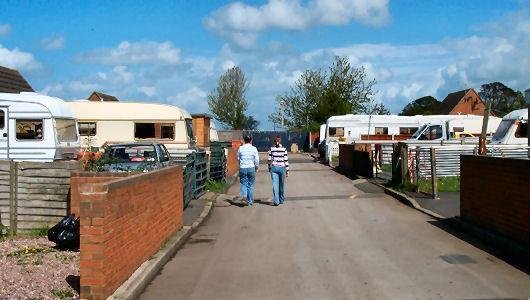
I have received a lot of emails and phone calls about the proposed permanent traveller sites in Sutton as part of Sutton Council’s Local Plan.

The proposals for two travellers’ sites on Kimpton Park Way and Hannibal Way in Wallington are part of Sutton Council’s draft Local Plan in which they look at the borough as a whole to decide on how it may look. This plan identifies key sites and gives potential developers a steer when seeking planning permission. Any plans for a travellers’ site would still need full planning permission.

However, as the Local Plan admits, the council is going further than is required in law. The government changed the law on defining travellers to those with a ‘nomadic habit of life’ were required access to a site, thus reducing the need for councils to find sites.

Sutton Council have gone further though saying in their draft Local Plan: “It is the council’s view that, despite the Government’s 􀀃new definition, the council should continue to provide for the need identified for the borough’s permanent Gypsies and Travellers on the grounds that, the council site is so overcrowded, new site(s) are needed regardless.” (p.72, Sutton Local Plan Issues and Preferred Options document).

The council is consulting on this draft plan and has two questions relevant to this site:

  • Consultation Question 12a – Do you agree with the council’s standpoint on the need for new Gypsy and Traveller sites? If not, please give details.
  • Consultation Question 12b – Do you agree with the draft policy on Gypsy and Traveller sites ? If not, please give details.

You can see the standpoint and policy in the draft Local Plan here (the Sutton Local Plan Issues and Preferred Options document is a big download). The Sutton Local Plan Response Form can be found on the same page and should be emailed to planningpolicy@sutton.gov.uk.

At a time when we cannot find enough brownfield land to build a much-needed school and enough housing, I cannot see that we can justify relaxing the definition of travellers to supply extra provision for them at this time.

I have also sent a letter to the Secretary of State for Communities and Local Government, the Rt Hon Greg Clark MP, to clarify the ‘legal requirement’ element of Sutton Council’s proposals.

Calling for more funding into brain tumour research

Calling for more funding into brain tumour research

One of my favourite parts of being a member of the Petitions Committee is the variety of topics up for discussion. In my first few months on that Committee we have debated banning Donald Trump, stopping all immigration, and compulsorily giving children a meningitis vaccine, to name just a few.

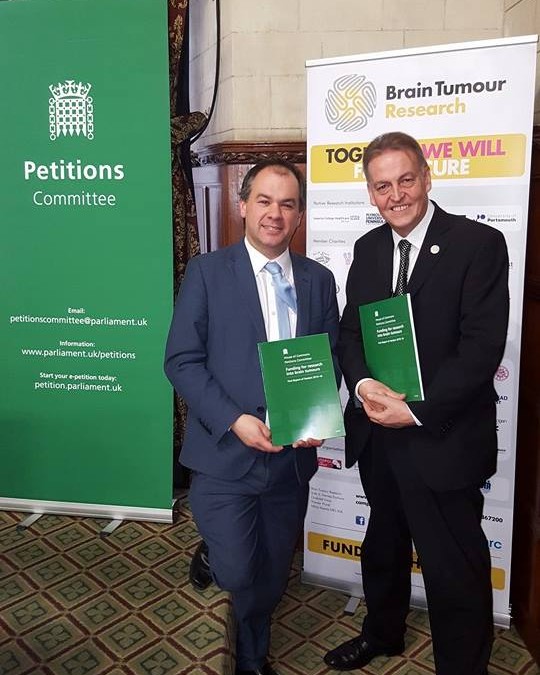
Recently, we had the chance to consider brain tumour research following a petition to parliament that reached 120,000 signatures, calling for increased funding into brain tumour research. It called on the Government to give a clear statement of whether current levels of funding are adequate, and if not, asks what it will do to improve it.

Unanimously, the Committee agreed that despite brain tumours being the biggest ‎cancer killer of children and adults under 40, patients are failed at every stage. So we produced a report and agreed to forward this topic for further debate in Parliament.

You can read the report we produced here and I look forward to the follow-up debate on April 18th.

Celebrating Commonwealth Day in Sutton

Celebrating Commonwealth Day in Sutton

Fifty-three countries came together yesterday to celebrate Commonwealth Day 2016 under the theme ‘An Inclusive Commonwealth’. Among the many activities and events taking place globally, a multi-faith service at Westminster Abbey welcomed thousands of guests from around the world.

Commonwealth Day is held on the second Monday in March every year. It is an opportunity for individuals, communities and organisations to promote shared Commonwealth values of peace, democracy and equality, and to celebrate the association’s rich diversity. Each year a theme is chosen for Commonwealth Day.

The theme helps to guide our activities and those of Commonwealth organisations throughout the year. Find out more about the 2016 theme: ‘An Inclusive Commonwealth’.

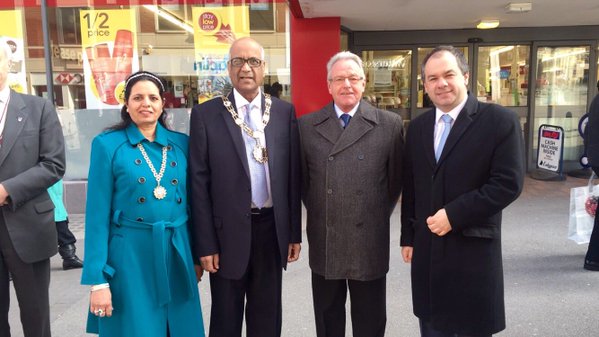
Yesterday I joined the Mayor of Sutton in Trinity Square to celebrate Commonwealth Day in Sutton and I would like to say thank you to him for inviting me, and to everyone I met there.


Supporting disabled people to return to work

Supporting disabled people to return to work

I have had a number of  people contact me, primarily over social media, about the Welfare Reform Bill which I supported and indeed served on the Bill Committee as it was going through the legislative process. The bill proposed a number of changes but the area that has been raised by most people is the changes to the Employment Support Allowance (ESA) for people within the Work Related Activity Group (WRAG). In the Summer Budget 2015, the Chancellor announced that from April 2017, new ESA claimants who are placed in the WRAG will receive the same rate of benefit as those claiming Jobseekers Allowance (JSA). The changes only affect new claims after that date and there will be no cash losers among those who are already in receipt of ESA.

The UK has created more jobs than the rest of Europe combined in recent years but that benefit has yet to reach those on ESA. While 1 in 5 JSA claimants move off benefits every month, this is true of just 1 in 100 of ESA WRAG claimants. They deserve better than this. As well as providing financial security for individuals, there are many reasons  why for those who are able to, work is the most effective way to improve the well-being of individuals and their families. Those in the WRAG currently receive additional cash payments but little employment support. Fixing on welfare treats the symptoms but not the causes of poverty and thus all too often can trap people into dependency. The additional cash payment in some cases can act as a disincentive  to move into employment. Therefore some of the money currently spent on cash payments will be redirected into practical support that will make a genuine difference to people’s life chances.

This new funding will be worth £60m in 2017/18 rising to £100m in 2020/21. It will support those with limited capacity for work to take steps to move closer to the labour market and then when they are able, back to work. How the money will be spent is going to be influenced by a taskforce of representatives from disability charities, organisations, employers, think tanks, providers and local authorities. Most people with disabilities and health conditions want to get back to work.  There is a large body of evidence that work is generally good for physical and mental wellbeing. A White Paper will shortly be published which will set out the reforms to improve the system of support. In addition to this, Universal Credit is already helping by introducing earlier support and putting claimants in the best position to move into and stay in work. They can work with their dedicated Work Coach alongside health professionals to receive personalised integrated support. The new Work and Health Unit has at least £115m of funding to pilot new ways to join up across the health and employment systems. £43m is being invested over the next three years to trial ways to provide specialist support for people with mental health conditions. The government’s Disability Confident campaign seeks to challenge the attitudes of employers towards recruiting and retaining disabled people.

The government is spending £ 50bn each year on benefits to support people with disabilities or health conditions. This is over 6% of all government spending. The budget for Disability support has been higher in every year since 2010 than that of the last Labour government. I believe that it is important that it gets to those who need support most and is spent on securing a long term benefit to those who need such support. Some of the media coverage on this issue has been emotive, relying on the thought that it is simply best to write off the possibility of 99 out of 100 people with a disability or a health condition. I made my decision to support the government in order to tackle the long term underlying issues which can help those individuals get into and stay in work.

Victoria House planning application submitted

Victoria House planning application submitted

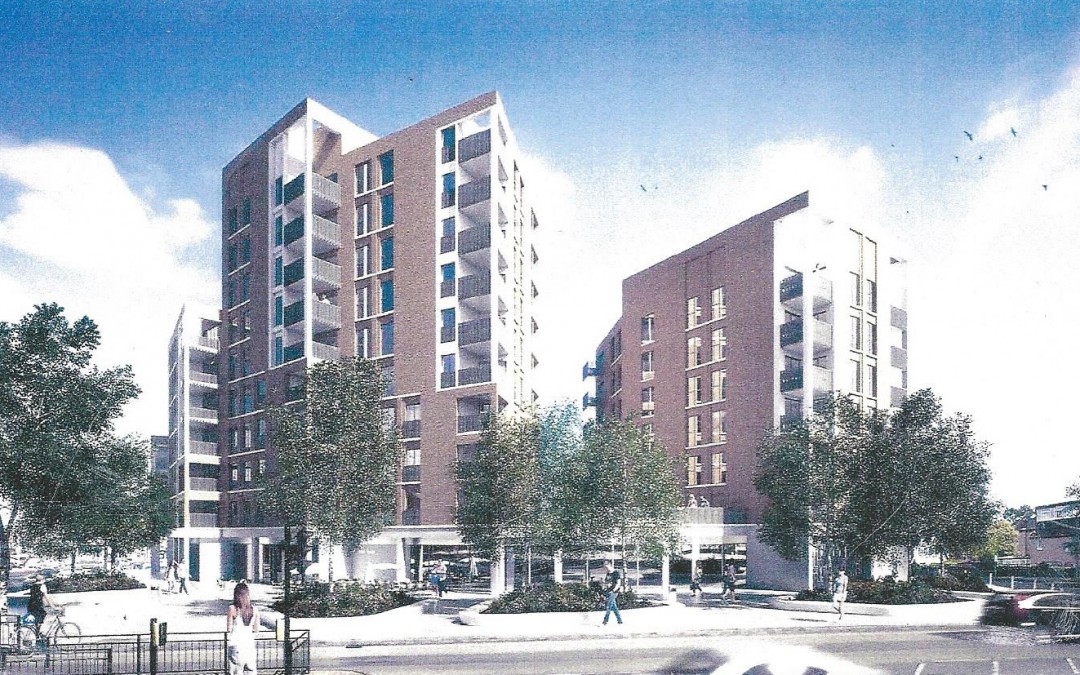
A planning application to demolish the eyesore that is Victoria House in North Cheam, and build housing on the site, has finally been submitted.

The application is for four blocks ranging from four to ten storeys high, to provide 90 residential units (including 9 affordable units), with the potential for 282 occupants as well as retail space. There will be 55 parking spaces, 45 dedicated to residents, and 10 to be shared with shoppers. There will also be 4 parking spaces for retail outlets, 3 parking spaces for motorbikes and storage space for 96 bicycles.

You can view the plans online here by searching for the application number A2016/73710. The consultation period begun on 2nd March and closes on 1st April. You can comment on the proposed plans by writing to the London Borough of Sutton Planning Division at 24 Denmark Road, Carshalton, SM5 2JG, or by emailing developmentcontrol@sutton.gov.uk.

Speaking to residents, I understand that some concerns still remain about the height and design of the development, plus the lack of enough parking spaces. For years, Victoria House has been an eyesore on the skyline of North Cheam. Whilst we cannot have a development at any cost approach, there is also the need for Victoria House to be demolished and developed sometime soon. I will be following the debate carefully to make sure this important landmark site is returned to a state in which local residents can be proud.

I would urge residents to register their opinions with Sutton Council, and I am glad to see that we are one step closer to seeing this eyesore demolished.

Sutton for London Growth event

Sutton for London Growth event

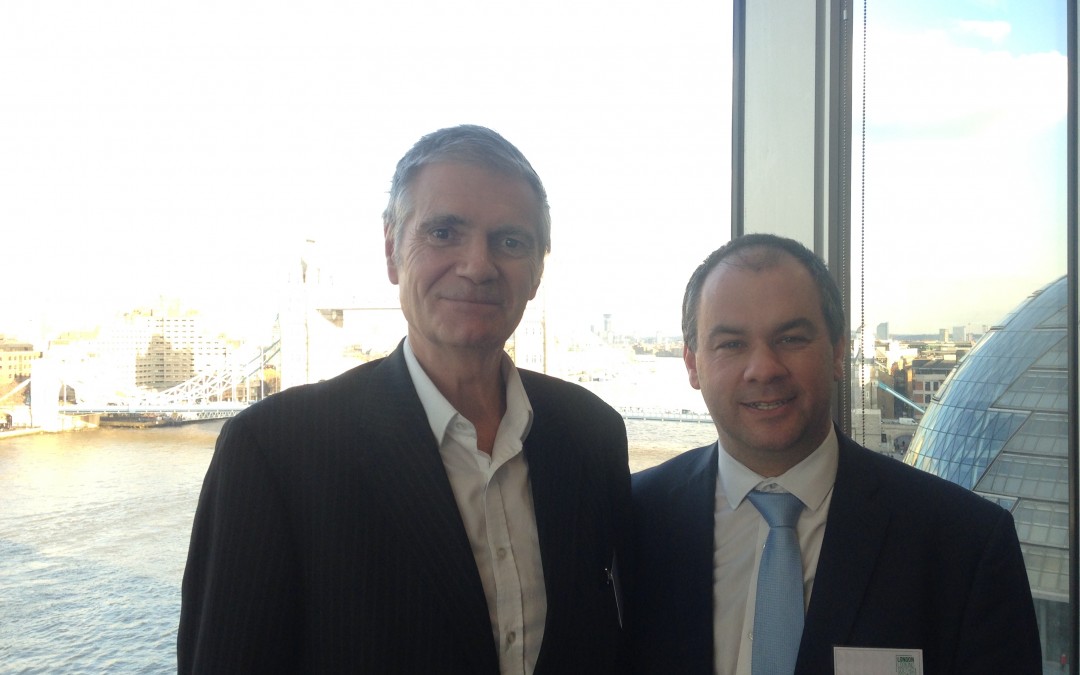
Recently I joined Steve O’Connell, our Conservative London Assembly Member for Sutton and Croydon, at an event in London where Sutton Council gave a presentation to City Hall representatives and candidates for the Greater London Assembly. I was delighted to attend both to represent Sutton, and to scrutinise what the Council was saying about the future of our Borough to the Greater London Authority.

A major part of the presentation was Sutton Council’s 2031 Local Plan, on which it is currently consulting the public. The plan seeks to come up with a vision about what Sutton should look like in 15 years time. I have also been asking residents for their views, and you can take part by visiting suttonlocal.org.uk. The plan offers an exciting future for Sutton. The Chief Executive, and the Leader, of Sutton Council both spoke about how Sutton previously looked southwards towards Surrey, but is now looking to London, accepting itself as part of our capital city, and its plans for growth. I am fully behind this endeavour, as long as the Council comes good on their promise to deliver. Their last local plan and High Street regeneration was a shambles, and they do not have the best record of delivery. I will continue to be a strong voice for Sutton and will keep the pressure on the Council to deliver the growth it promises to residents and to London. Some people want to preserve the borough in aspic. Of course we all want to protect the very best of our local area; the things that give it a unique atmosphere. However to push against the inevitable growth of London will mean that we will forfeit the opportunity to shape that growth here in South London to suit ourselves. Rather than manage gradual decline, as has happened in parts of Sutton for many years, we need to be proactive and deliver a vision that works for us as local residents.

Part of that growth will come from Transport improvements. Compared to other boroughs, Sutton is not well connected, with irregular and unreliable overground rail service being provided by Thameslink and Southern Railways, no tramlink, no London Underground, no London Overground, no Crossrail and only a handful of night bus services. We are starting to make inroads in this area. Within my first year of being a MP, I have managed to get Transport for London (TfL) to agree to get the exciting Crossrail 2 rail service to stop at Worcester Park which will ease congestion, increase frequency of service and provide a greater range of destinations. I joined a delegation of London MPs to lobby successfully for responsibility of London’s suburban rail services provided by Thameslink, Southern, South West Trains and Southeastern, to be transferred from the Department of Transport to TfL, as these companies have proven to be unreliable and I do not believe they can improve their services in a reasonable timescale. I am delighted that this is now going to happen when these rail companies’ contracts expire. Steve O’Connell has also successfully lobbied the Mayor for the 154 to run a night service at weekends.

Perhaps by biggest transport concern was to finally get the Tramlink extended to Sutton. This has the support of over 80% of Sutton residents, and it has been supported by the Greater London Assembly, TfL, the Mayor of London Boris Johnson, and Steve O’Connell. Boris made City Hall funds available for this project and told Sutton Council to come up with their share of the funds together with a plan to deliver the growth in housing and jobs along the proposed Tramlink route which would justify that capital spend. However, the Council have not backed up Boris’ eagerness with a clear plan for deliver which has led this project to sit on ice for several years. That is why I brought the Chancellor, George Osborne, and the Conservative Candidate for London Mayor, Zac Goldsmith to Sutton to speak with me, Steve O’Connell and a group of local business leaders to lobby for the funds for the tramlink extension. I am delighted that they agreed how good the extension would be for Sutton and you can read more about how this could be funded in future here.

Now we are a step closer to delivering on the Tram, I want to move onto pushing for the London Overground service to be extended to Sutton from West Croydon via Waddon, Wallington and Carshalton Beeches. This extension should be a lot easier and less costly as the rail lines are already there. This service would link Sutton to parts of London that were previously hard to get to for Sutton residents.

Later, we were also treated to a presentation from the Institute of Cancer Research, which is hoping to open a new hub on the Sutton Hospital site, linked with the Royal Marsden. I was very impressed to hear the advances that the ICR had made in treating cancer, even in just the last decade, and having a world class research facility in Sutton is a very exciting prospect. My only concern with this element is the presumption that this hub will come with a new secondary school. Everyone knows that Sutton is facing a school place crisis, with a need for 500 new school places by 2020-21, but currently not even a site identified and confirmed, let alone planning permission or construction underway. This project should not presume a secondary school. It was never part of the agreement and for a secondary school to be built there, it would likely have to be some four storeys tall and centimetres away from the closest residential home. I believe we need to park the idea of the school, get on with building this exciting facility and get a desperately needed secondary school built on the appropriate site in Rosehill.

One area of the presentation that did concern me was a presentation regarding housing and the Sutton Decentralised Energy Network (SDEN). Since being elected in May 2015, one of the biggest issues that people have come to me asking for help with is housing. I have heard extremely distressing cases involving children, people with mental and physical disabilities, etc, living in damp and derelict conditions, completely unsuited to their needs. However, I am limited as what I can do as there simply isn’t enough housing stock to meet the demand. The truth is, there just isn’t enough housing being built in Sutton. I believe we need to completely rethink urban living to tackle this problem. Sutton has often been thought of as a green and leafy suburb, and while many areas in the Borough still fit this description, our population is growing fast and our town centres are becoming crowded. We need to build more, but build well. This involves, in my view, not being afraid to build higher in the town centre, where tall developments will not overlook people’s back gardens and not destroy local charm. The presentation was an attempt to say that Sutton was meeting housing targets, but its far from having enough development planned to meet demands. It also was an attempt to say that Sutton was building well and sustainably. The example of BedZed in Hackbridge which was cited is some fifteen years old, not universally feted by local residents and isolated as a single example of its kind. We need to look beyond past glories and learn from other boroughs and other cities to see how to satisfy housing demand whilst protecting open spaces and family homes as well as ensuring the necessary supporting infrastructure and local jobs are in place.

I am sceptical about the proposed Sutton Decentralised Energy Network (SDEN). In short, SDEN is an energy company set up by Sutton Council to run and profit from the energy created through burning waste at the planned incinerator in Hackbridge by selling this to homes being built on the Felnex estate in Hackbridge, and then to more homes throughout the Borough. My concern comes not from the fact that the Conservatives in Sutton opposed building the incinerator in the first place, but that price estimates for the energy sold from the incinerator appears to be locking in new residents to incredibly uncompetitive prices.

I am grateful for being invited along to this event and I am excited about the projects that are underway for Sutton. Whilst I belong to a different political party to the one that runs Sutton Council, I want to be a constructive partner in delivering growth for Sutton, and I am always willing to work for the good of the Borough. I will criticise the Council when it lets residents down, but it will not be without offering an alternative and a helping hand to get it right.